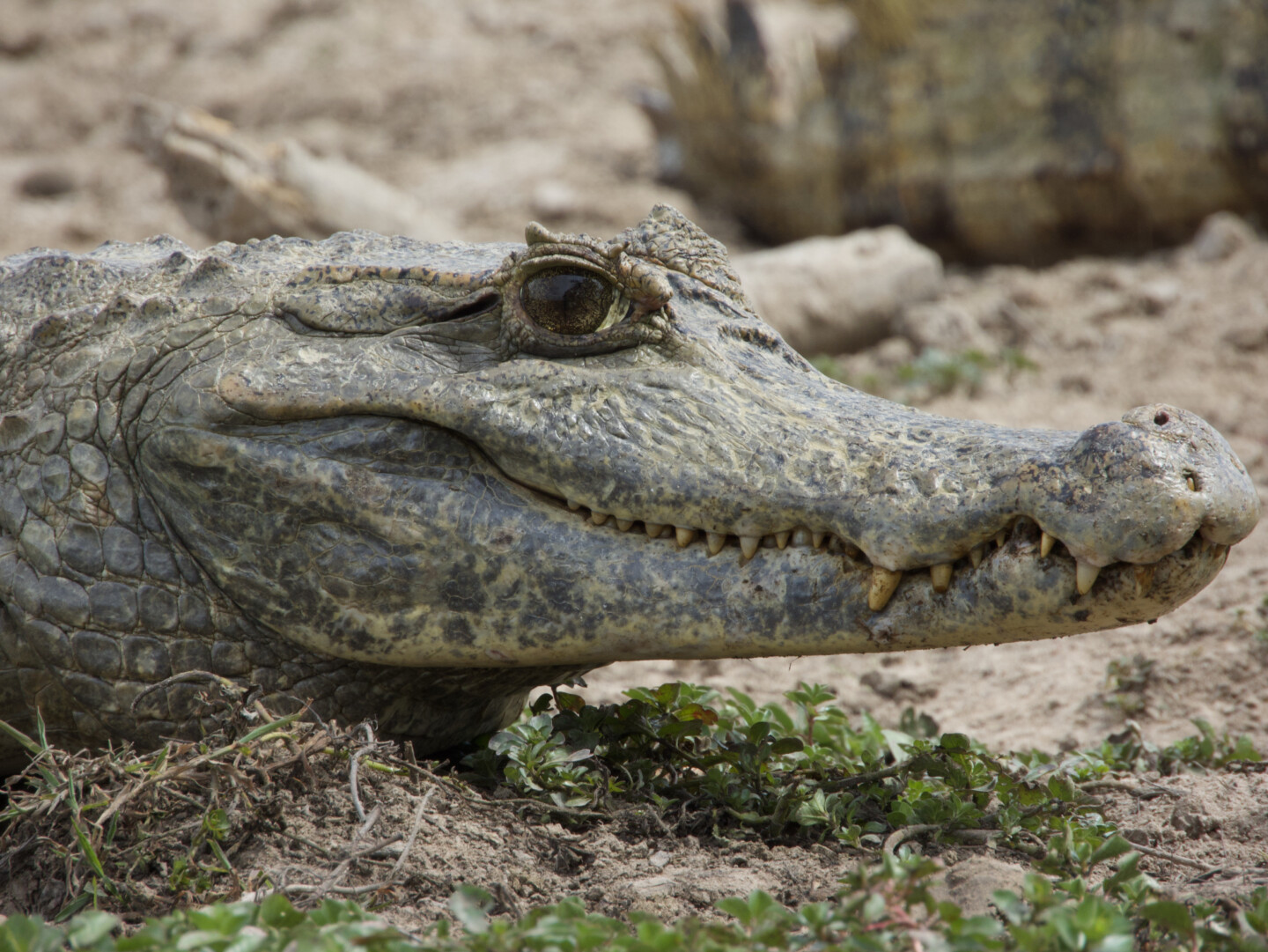
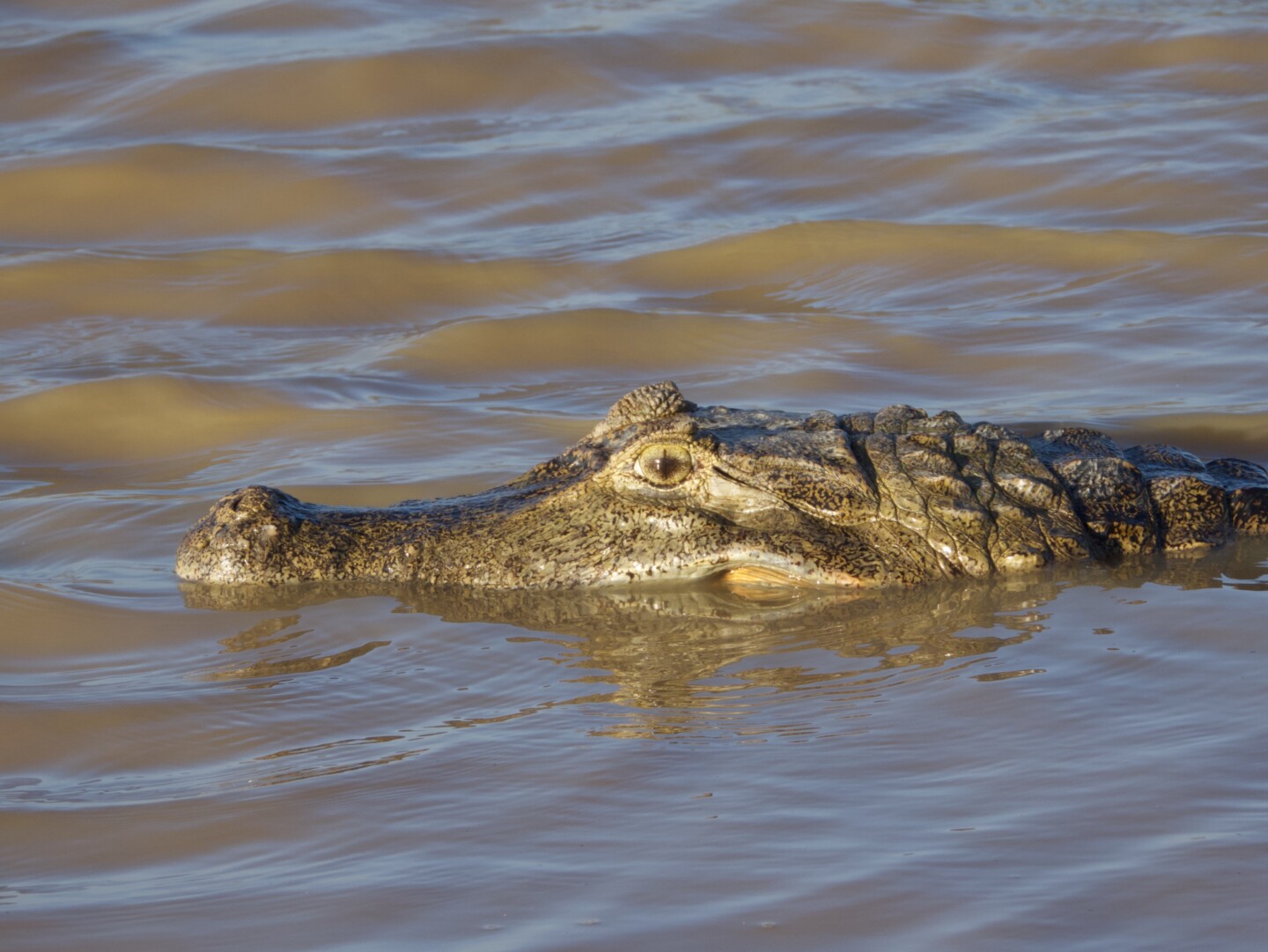
The Black Caiman (Melanosuchus niger) is one of the largest and most formidable members of the Alligatoridae family, endemic to the swamps, rivers, and lakes of the Amazon Basin. Distinguished by its massive size, a mature Black Caiman can reach lengths of up to 20 feet, making it one of the largest reptiles in the world. Its dark, almost black, heavily-armored scaly skin provides an effective camouflage in the murky waters it inhabits. This nocturnal predator has a broad snout filled with an array of sharp teeth designed for gripping prey, and its powerful jaw can easily crush bones. The eyes of the Black Caiman glow red at night, adding to its eerie presence. Known for its opportunistic feeding habits, it preys on a variety of animals, ranging from fish and birds to larger mammals like deer and capybara. This apex predator plays a crucial role in maintaining the ecological balance of its habitat, though it faces threats from habitat destruction and illegal hunting.
Habitats & Distribution
The Black Caiman inhabits freshwater environments primarily within the Amazon Basin, including rivers, lakes, and floodplains. Preferentially found in slow-moving waters, it can also thrive in seasonally flooded areas and marshes. This semi-aquatic reptile is adapted to both densely forested and open wetland ecosystems, which provide ample food supply and cover.
Geographically, the Black Caiman's range extends across several South American countries, including Brazil, Peru, Bolivia, Colombia, Ecuador, Venezuela, and Guyana. It is one of the largest and most widely distributed predators in the Amazon, playing a critical role in its aquatic ecosystems.
Behaviours & Reproduction
The black caiman exhibits a primarily solitary behavior but becomes more social during the mating season, which typically occurs from May to August during the rainy season. Males establish and defend territories to attract females, often engaging in vocalizations and physical displays to ward off rivals. Females lay between 30 to 65 eggs in carefully constructed nests made of mud and vegetation along riverbanks.
After an incubation period of about 6 to 10 weeks, the hatchlings emerge, often under the vigilant eye of the mother who guards the nest from potential predators. This maternal care continues post-hatching, with the mother protecting the young for several weeks or even months, guiding them to water and assisting them in feeding. This protective behavior increases the survival rate of the offspring in their vulnerable early stages of life.
Diet
The Black Caiman (Melanosuchus niger) is an apex predator with a diet that mainly consists of fish, including piranhas and catfish, but its opportunistic feeding behavior allows it to consume a wide variety of prey. This large reptile also preys on birds, turtles, capybaras, and other mammals that venture close to water edges, and occasionally it captures and eats smaller caimans. Juvenile Black Caimans initially feed on invertebrates like insects and crustaceans before graduating to larger prey as they grow. One interesting aspect of their diet is their capability to hunt at night, utilizing their acute sense of sight and hearing to catch prey. Their powerful jaws and conical teeth are designed to grasp and hold prey, making them efficient hunters in their Amazon Basin habitat.
Colors
The Black Caiman (Melanosuchus niger) features dark, almost black, coloration which provides effective camouflage in the murky waters of its habitat. Its skin is covered in bony, ridged scales that enhance its stealth in the wild. Juveniles are often lighter with yellow or white bands, which help them blend into sunlit patches and leafy shadows. As they mature, these markings fade into the predominantly dark hue, aiding in protection from both prey and predators.
Fun Facts
Black Caimans are excellent night hunters, thanks to their highly reflective eyes which enhance night vision by reflecting light into their eyes, making prey detection easier in the dark. These reptiles have impressively strong jaws and some of the most powerful bite forces among all crocodilians. Interestingly, despite being top predators, Black Caimans are quite vocal and communicate using a variety of sounds such as grunts, growls, and bellows, especially during the mating season. A quirky tidbit is that juvenile Black Caimans often balance on their mother's head or back for protection, creating an adorable yet formidable sight in the wild.
Conservation Status & Efforts
The conservation status of the Black Caiman is classified as "Least Concern" by the IUCN Red List, reflecting a significant recovery from its previously endangered status. Population trends indicate a rebound in numbers across its range, primarily due to stringent anti-poaching laws and sustainable management initiatives. This resurgence is noted in regions such as the Amazon basin, where once decimated populations are now stabilizing.
The primary threats to the Black Caiman include habitat destruction, illegal hunting for their skins, and human-wildlife conflicts. Specific conservation measures include habitat protection, enforcement of anti-poaching regulations, and community-based management programs that involve local populations in conservation efforts. These efforts, along with transboundary cooperation among South American countries, are crucial for maintaining the species' recovery trajectory and ensuring long-term survival.
Gallery