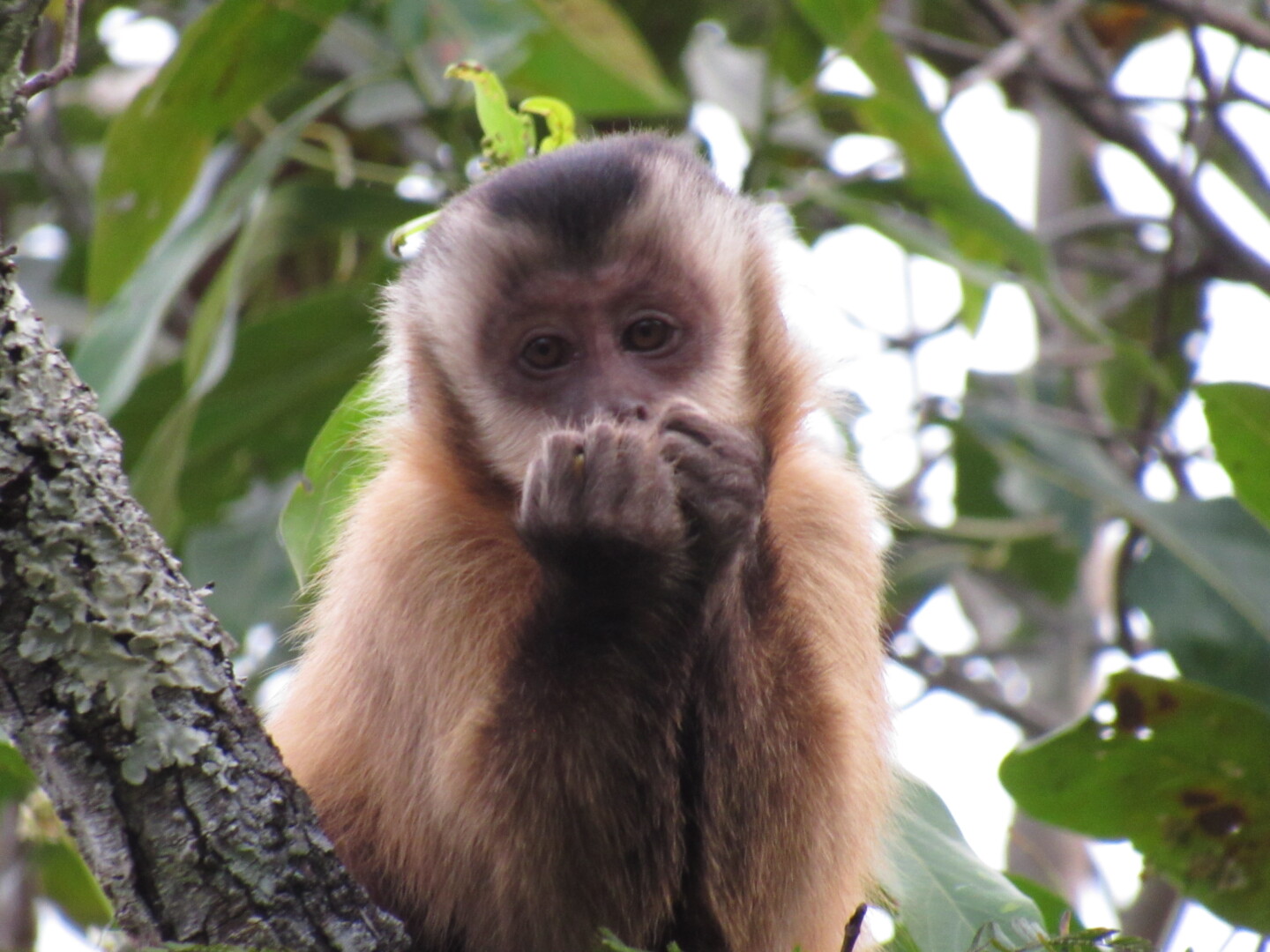
The Brown Capuchin (Sapajus apella) is a captivating primate native to the tropical forests of Central and South America, renowned for its intelligence and social behavior. Characterized by its distinctive brown fur, which typically ranges from light to dark shades, this medium-sized monkey features a unique prehensile tail that enhances its agility, allowing it to expertly navigate tree branches in search of fruits, nuts, and insects. With expressive faces and dexterous hands, Brown Capuchins are often observed using tools, such as stones, to crack open tough shells, showcasing their remarkable cognitive abilities. Social animals, they live in family groups, often displaying a complex hierarchy and strong bonds, making them a fascinating subject of study for researchers interested in animal behavior and cognition.
Habitats & Distribution
This species primarily inhabits a variety of tropical and subtropical environments, including rainforests, savannas, and gallery forests, often being found near water bodies. They are adaptable and can thrive in both primary and secondary forests, showcasing a preference for areas with abundant fruiting trees, as their diet heavily relies on fruits, seeds, and insects.
Geographically, they are distributed across a wide range that includes northern and central South America, specifically found in countries such as Brazil, Colombia, Peru, and parts of Venezuela. Their range extends from the Amazon Basin to the Atlantic Forest, making them one of the more widespread capuchin species in the region.
Behaviours & Reproduction
These primates exhibit a complex social structure characterized by small to medium-sized groups, often comprising 10 to 40 individuals. Their social interactions are marked by strong bonds, particularly among females, which play a crucial role in rearing the young. Mating typically occurs year-round, with females displaying estrous cycles that signal their reproductive readiness. Males engage in competitive displays to win mating rights, though they also form alliances that can help increase their reproductive success.
Reproductive strategies include a noteworthy level of parental investment from both sexes, with males sometimes assisting in the care of the offspring. Mothers typically give birth to a single infant after a gestation period of about 150 days, and the young are nursed for several months. This strong focus on social bonds and cooperative care often enhances the survival rates of the young, facilitating the development of social skills necessary for their future roles within the group.
Diet
The Brown Capuchin (Sapajus apella) has a diverse and opportunistic diet mainly consisting of fruits, seeds, nuts, and insects, but they are also known to consume small animals and bird eggs. Their foraging behavior is quite sophisticated, as they utilize tools such as sticks and stones to access food otherwise out of reach, particularly when cracking open hard nuts or gaining access to honey. These monkeys are also known to engage in cooperative foraging, which helps them efficiently locate and consume food sources by working together. An interesting aspect of their diet is their habit of including a variety of plant materials, leading to cultivation behaviors where they disperse seeds and potentially contribute to forest regeneration through their feeding activities.
Colors
The Brown Capuchin (Sapajus apella) features a predominantly dark brown to golden-brown fur, with lighter cream or tan shades on the face, throat, and underbelly. Its face often has a pronounced darker mask around the eyes, adding to its expressive appearance. Their limbs are typically darker, while the tail is long and prehensile, aiding in their arboreal lifestyle. This coloration provides effective camouflage in their forest habitat, blending with the dappled light of the canopy.
Fun Facts
Brown capuchins are known for their incredible dexterity and intelligence, often using tools like sticks to extract insects from crevices or stones to crack open nuts. They have a quirky social dynamic, forming tight-knit groups with complex hierarchies, and they engage in playful grooming rituals that strengthen bonds. One fascinating adaptation is their ability to recognize themselves in mirrors, indicating a level of self-awareness. They also exhibit unique vocalizations, creating a variety of sounds to communicate, including alarm calls that can indicate different types of threats. Additionally, these monkeys have been observed exhibiting empathy, as they will comfort distressed group members.
Conservation Status & Efforts
The Brown Capuchin is currently listed as Least Concern by the IUCN, but its population is experiencing localized declines due to habitat loss and hunting. The primary threats include deforestation driven by agriculture, logging, and urbanization, as well as the illegal pet trade. In some regions, populations have also been affected by the fragmentation of their habitats, which impacts their social structures and breeding success.
Conservation efforts are focused on habitat preservation, with initiatives aimed at protecting remaining forest areas through the establishment of reserves and national parks. Additionally, education programs are being conducted to raise awareness about the importance of wildlife conservation and to discourage hunting and trapping. Some projects involve community-based ecotourism, which provides alternative economic incentives while promoting the protection of both the Brown Capuchin and its habitat.
Gallery