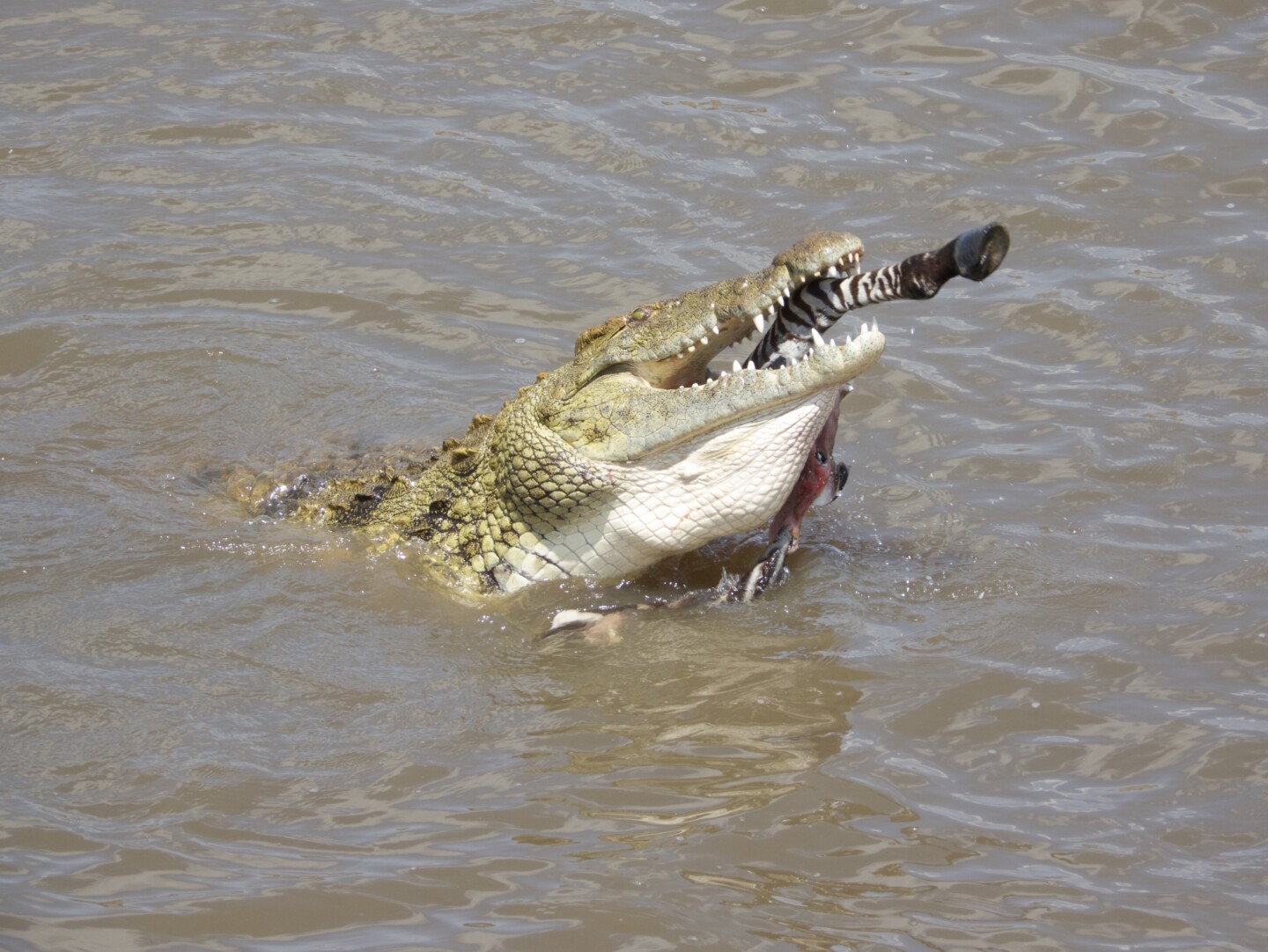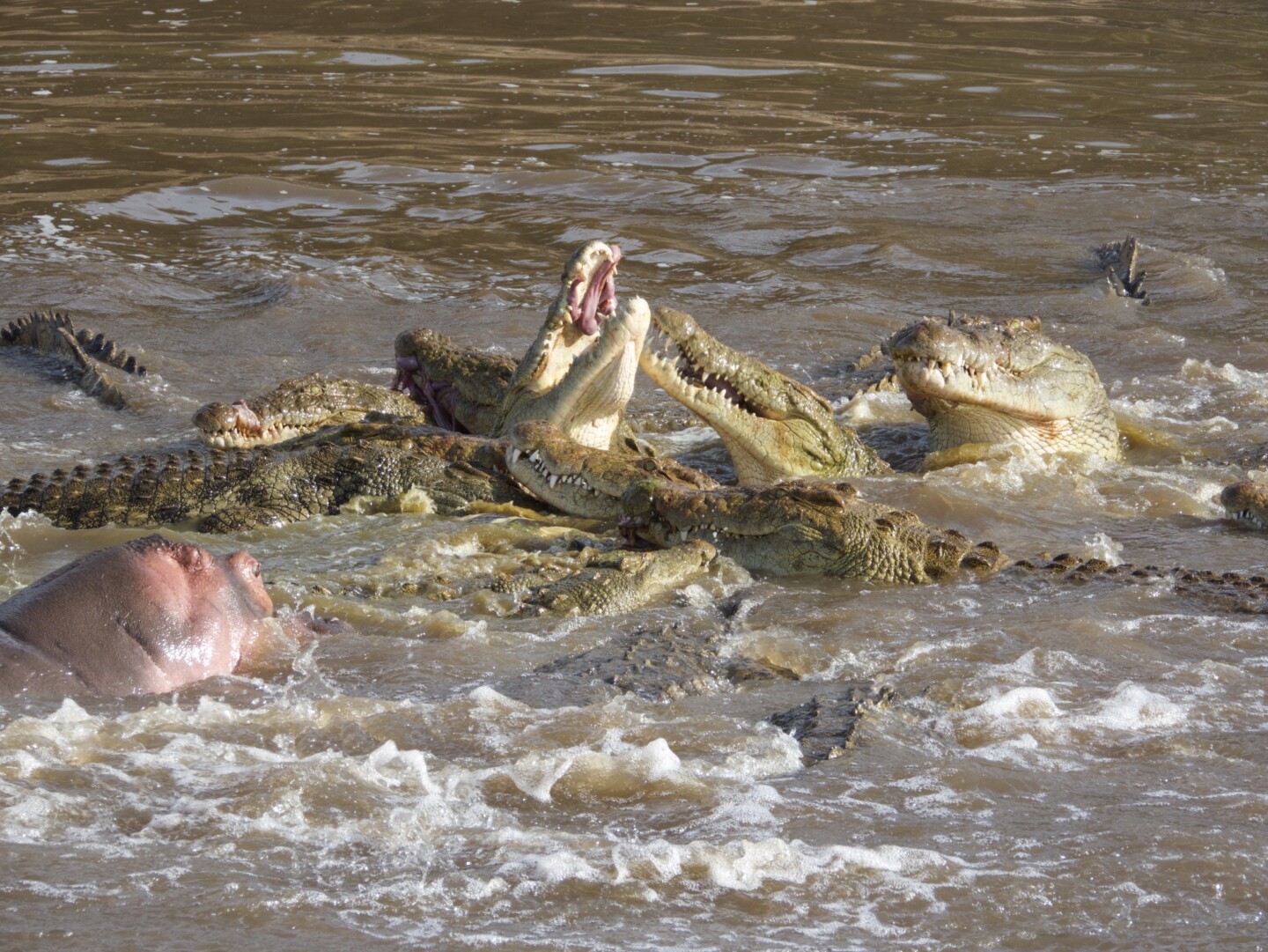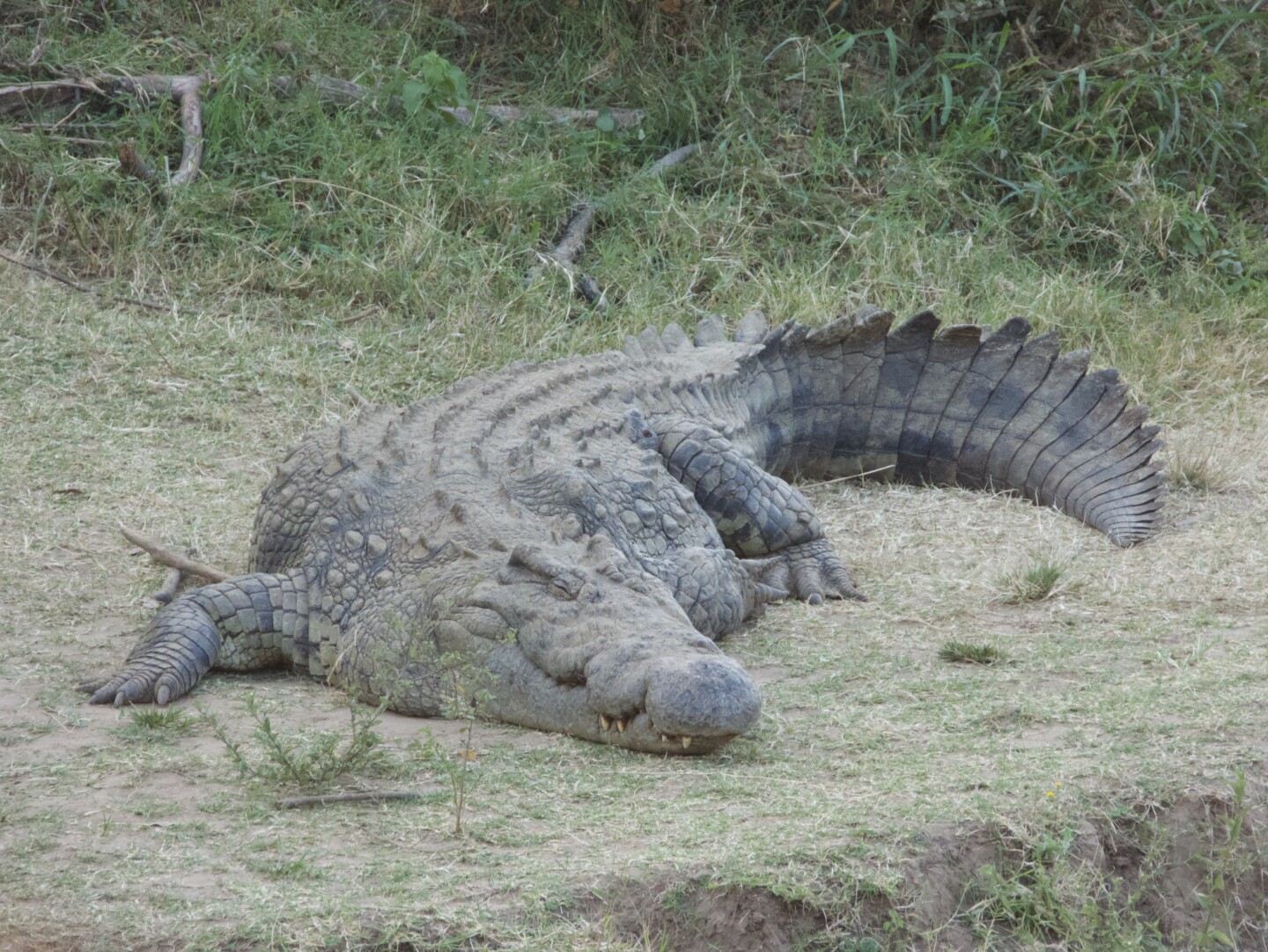
The Nile Crocodile (Crocodylus niloticus) is one of the largest and most formidable reptiles in Africa, often regarded as a living relic from the age of dinosaurs. Typically growing up to 16 feet in length, though some individuals can reach over 20 feet, this apex predator boasts a robust and muscular body covered in thick, keratinized scales that range in color from olive green to dark brown, affording it excellent camouflage in its natural freshwater habitats. Known for its incredible bite force and patience as an ambush hunter, the Nile Crocodile has a long, powerful tail and strong limbs that aid in swift aquatic maneuvers and terrestrial agility. Unique to this species are its conical teeth, designed for gripping and tearing rather than chewing, and a set of sensory pits along its jaws called "Integumentary Sense Organs," which detect minute vibrations in the water. With a lifespan often exceeding 70 years, these ancient reptiles play a pivotal role in their ecosystems, maintaining balance by preying on fish, birds, and mammals, including the occasional large ungulate that ventures too close to the water's edge.
Habitats & Distribution
The Nile Crocodile inhabits a variety of freshwater ecosystems including rivers, lakes, marshes, and dams. They are particularly well-suited to slow-moving or stagnant bodies of water, where their ambush hunting tactics are most effective. Occasional forays into brackish waters and man-made water bodies are also observed, indicating their adaptability to different aquatic environments.
Geographically, the Nile Crocodile is found across sub-Saharan Africa, from the Nile Basin in Egypt down to South Africa, and from West Africa in Senegal and Ivory Coast across to East Africa. Their range also extends to Madagascar. This wide distribution showcases their ability to thrive in diverse climatic conditions, from tropical forests and savannahs to arid regions with adequate water sources.
Behaviours & Reproduction
Nile Crocodiles exhibit complex social structures, often gathering in large groups but establishing clear hierarchies dominated by large, territorial males. During the breeding season, males perform elaborate displays, such as water slaps, vocalizations, and head-slaps, to attract females and deter rival males. Mating generally occurs in shallow waters, and females lay between 25 to 80 eggs in meticulously constructed nests, typically dug into sandy riverbanks or shorelines.
Female Nile Crocodiles are highly protective of their nests and will guard them aggressively for the incubation period of about 90 days. Once the eggs hatch, mothers often transport their hatchlings to water in their mouths, providing protection and assisting in the early survival stages. Hatchlings remain under parental care for several months, receiving protection from predators and learning vital survival skills. This level of maternal involvement is relatively unique among reptiles and highlights the species' intricate reproductive strategies.
Diet
The Nile Crocodile (Crocodylus niloticus) is an apex predator with a highly varied diet that evolves as it matures. Juvenile crocodiles primarily consume insects, amphibians, and small fish, gradually expanding their diet to include larger prey such as birds, mammals, and larger fish as they grow. Adult Nile Crocodiles are known to take down large vertebrates, including antelope, zebras, and occasionally humans, reflecting their powerful hunting capabilities. They employ a strategy of ambush, lying in wait near the water's edge to capture unsuspecting prey with their strong jaws. Fascinatingly, these crocodiles have gastroliths—stones in their stomachs—that aid in digestion and balance, and they can go for long periods without food, showcasing their highly efficient metabolism.
Colors
The Nile Crocodile (Crocodylus niloticus) typically displays a dark bronze or olive green coloration on its dorsal side with yellowish or lighter hues on its underbelly. Its body is covered with rough, rugged scales and is often speckled with darker spots that serve as effective camouflage in murky water and amongst riverine vegetation, aiding in ambush hunting.
Fun Facts
Nile Crocodiles exhibit a quirky behavior known as the "death roll," where they spin rapidly in the water to dismember prey. They have an astounding ability to stay underwater for up to two hours, thanks to their specialized metabolism and efficient use of oxygen. Unique for their incredible maternal instincts, female Nile Crocodiles carefully guard and help hatch their eggs, even gently carrying their newborns in their mouths to the water. This apex predator also has an impressive dental regeneration system, capable of growing new teeth to replace lost ones throughout its life.
Conservation Status & Efforts
The Nile Crocodile's conservation status is currently listed as Least Concern by the IUCN, due to its wide distribution and relatively stable population trends. However, this doesn't imply the species is free from threats. Primary threats include habitat destruction due to agricultural expansion, illegal hunting for their skin and meat, and conflict with humans, especially in areas where they are deemed a danger to livestock and people.
Conservation efforts focus on habitat protection, legal regulations, and public education to mitigate human-crocodile conflicts. Several countries within the crocodile's range have implemented sustainable use programs that regulate hunting and trade, which aim to balance economic benefits with species preservation. Additionally, community-based conservation programs involve local communities in monitoring and protecting crocodile populations, promoting coexistence and fostering stewardship of the species.
Gallery