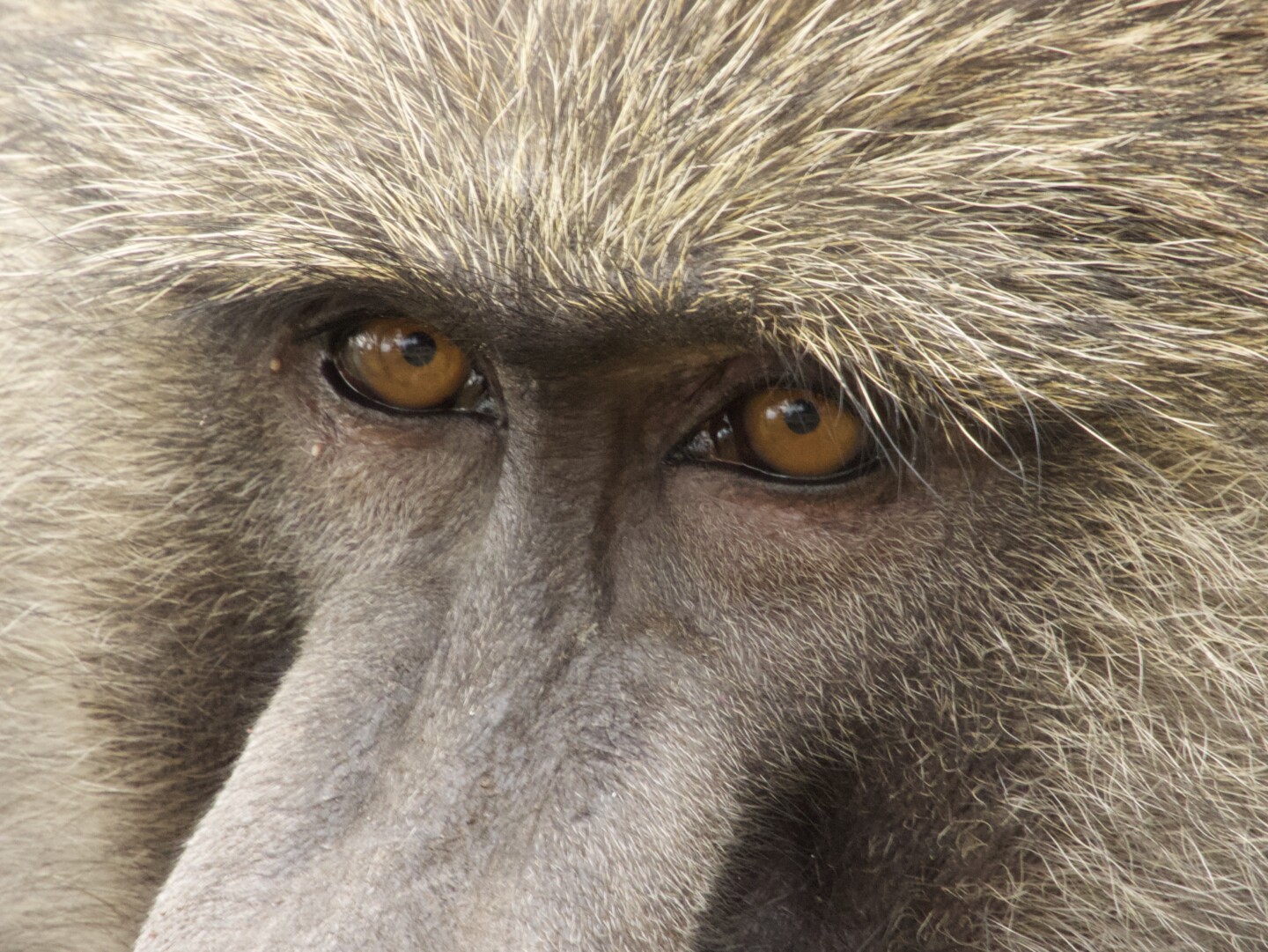
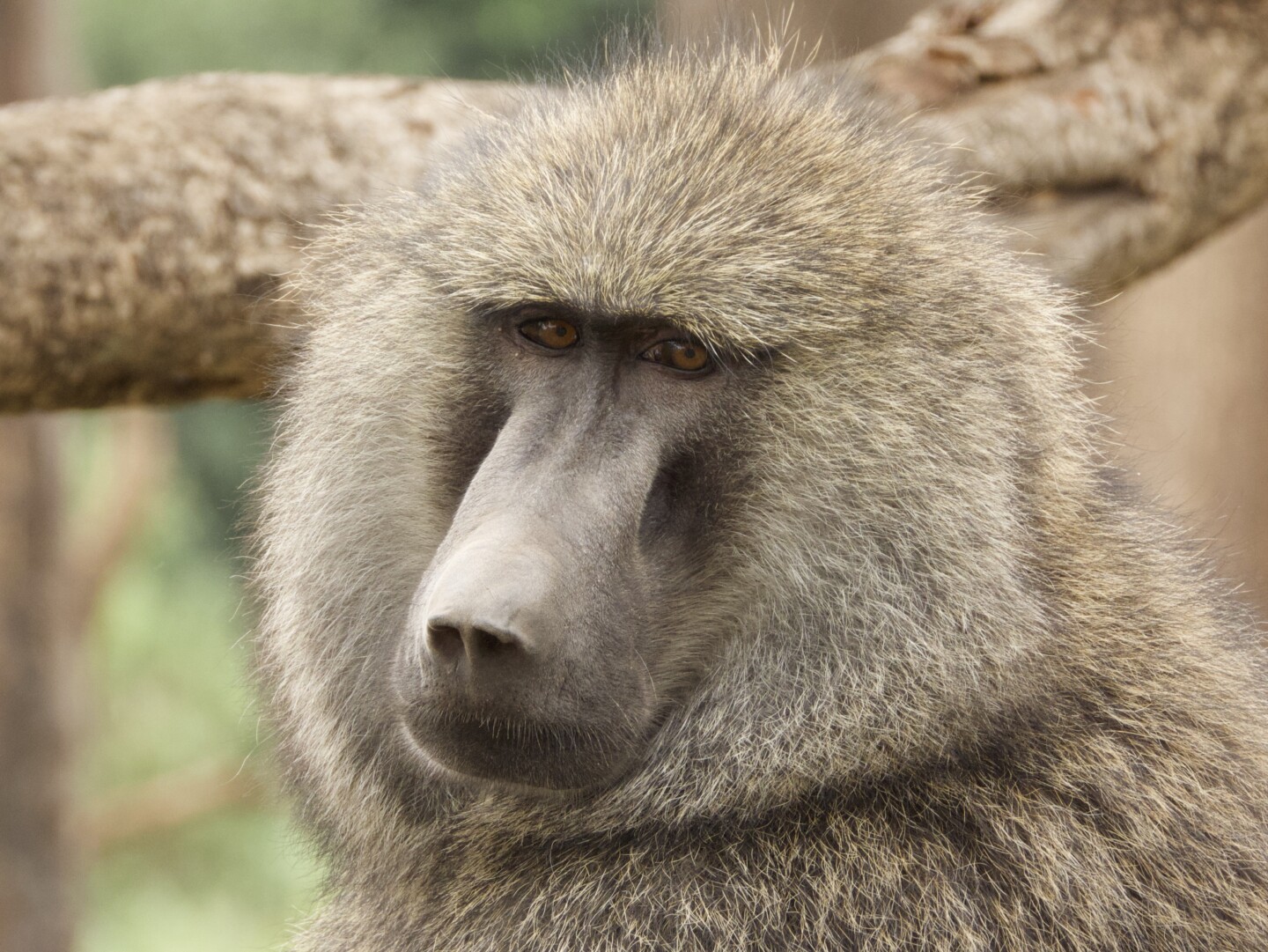
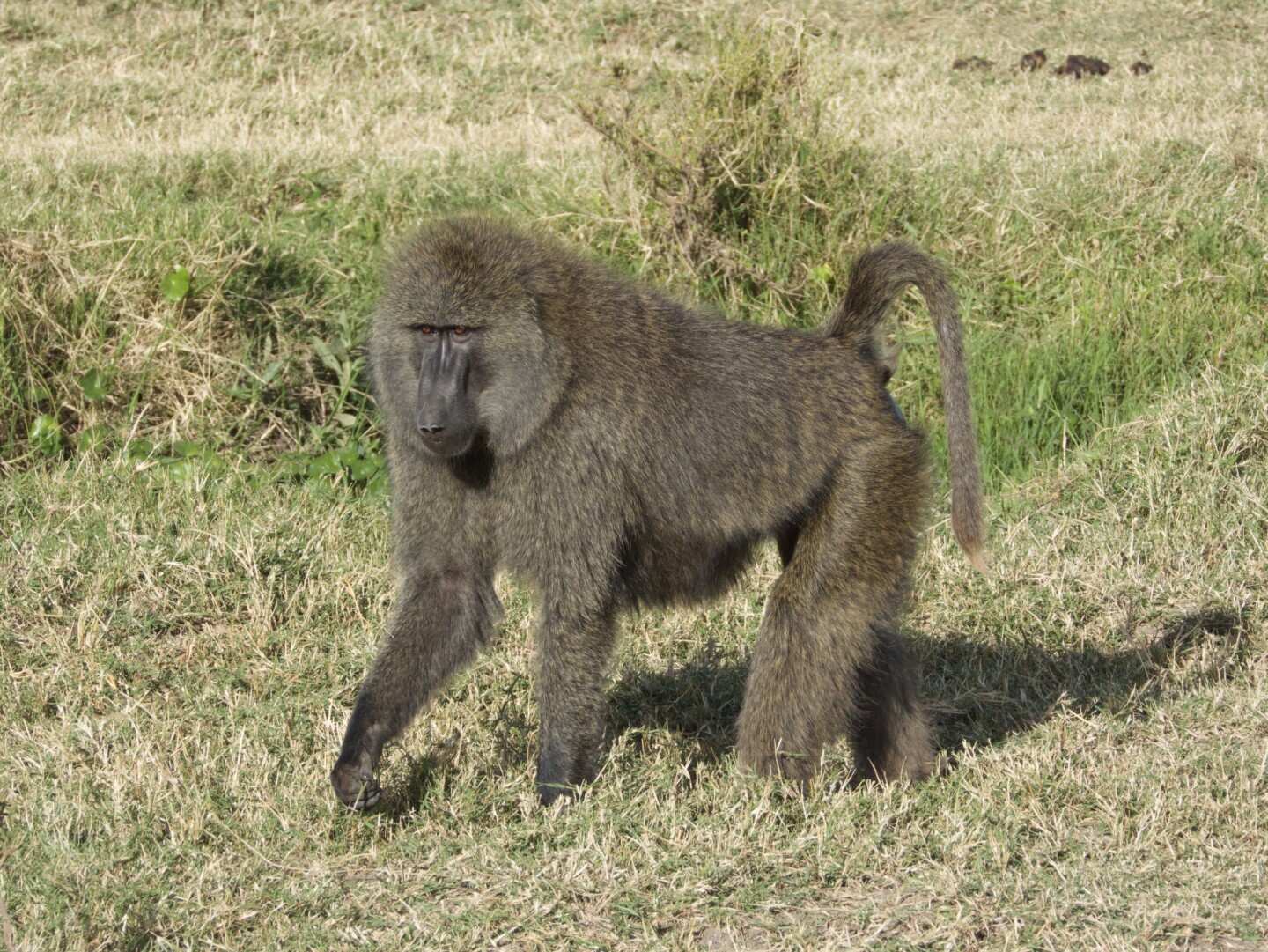
The Olive Baboon (Papio anubis), named for its distinctive greenish-grey coat, is a highly adaptable and social primate found across a broad range of habitats in Sub-Saharan Africa. Known for their expressive faces and sharp, close-set eyes, these medium to large-sized baboons exhibit a sleek, muscular build and a strong sense of curiosity and intelligence. Olive Baboons live in large, hierarchical troops that can number up to 150 individuals, displaying complex social behaviors and a remarkable adaptability to various environments, from savannahs to forests. Physically, they are characterized by their dog-like muzzles, powerful limbs, and a tufted tail. These omnivores have a diverse diet, ranging from fruits and seeds to small mammals, showcasing their impressive foraging skills. Notably, their cheek pouches store food, allowing them to eat on the move or save for later. Known for their vocal communications and interactions, Olive Baboons play a vital role in their ecosystems but also draw attention due to their occasional conflicts with humans, especially in agricultural areas.
Habitats & Distribution
The Olive Baboon primarily inhabits savannas, grasslands, and open woodlands, frequently found near water sources. They are highly adaptable and can thrive in a variety of other environments, including forests, steppes, and even rocky areas. This adaptability allows them to exploit a wide range of food sources, from fruits and seeds to small animals.
Geographically, Olive Baboons are widespread across sub-Saharan Africa, from West Africa to the eastern regions of the continent. They can be found in countries such as Senegal, Kenya, Tanzania, and Ethiopia, extending as far south as Zambia and Malawi. This extensive range highlights their capacity to endure diverse environmental conditions.
Behaviours & Reproduction
Olive baboons exhibit a complex social structure that revolves around multi-male, multi-female troops. Hierarchies are strictly maintained, with dominant males and females enjoying higher social status and better access to resources. Dominance among females is usually stable and inherited matrilineally, while male dominance hierarchies are subject to change, especially as younger, stronger males challenge older ones.
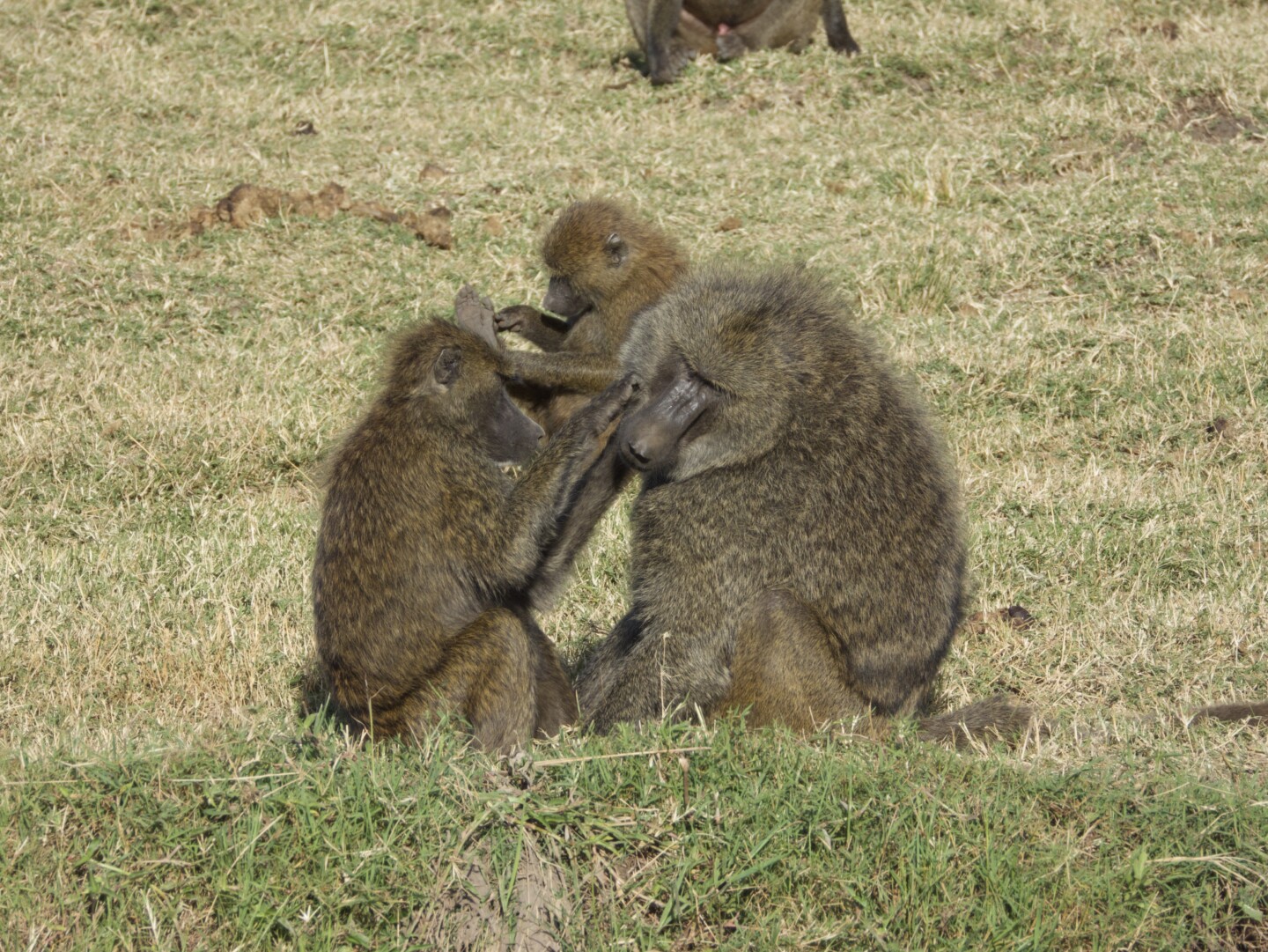
Mating habits are primarily promiscuous, with females mating with multiple males during their estrous cycle. Males engage in consortship, forming temporary associations with females to guard and mate with them, often using grooming to strengthen bonds and increase mating success. Unique reproductive strategies include "friendships," where males develop protective relationships with females outside of their fertile periods, increasing their chances of future mating opportunities. Females give birth to a single offspring after a gestation of approximately six months, and the maternal bond is strong, with infants receiving intensive care and protection for their first year of life.
Diet
The diet of the Olive Baboon (Papio anubis) is highly versatile and omnivorous, characterized by a wide range of food sources that include fruits, leaves, seeds, flowers, and various plant parts, as well as insects, small mammals, birds, and even reptiles. These baboons are opportunistic feeders, which allows them to adapt to different environments and food availabilities. They are known to forage both in trees and on the ground, often traveling significant distances in search of food. Olive Baboons are also known to raid crops and human settlements, leading to conflicts with humans in some areas. Their diverse diet not only ensures their survival in various habitats but also impacts the ecosystems they inhabit, as they play a role in seed dispersal and pest control.
Colors
The Olive Baboon (Papio anubis) has a coat that ranges from green-grey to dark olive in color, providing effective camouflage in its savanna and woodland habitats. The fur is multi-layered with yellow-brown and black mixed hairs, and the limbs and tail are usually darker. The face is hairless and dark brown to black, with distinctive ridges above the eyes, and there may be white tufts of hair on the sides of the face, enhancing their expressive features.
Fun Facts
Olive Baboons exhibit some quirky behaviors and fascinating adaptations. They have been observed using various tools, such as sticks to dig up roots or other foods. Their social structure is highly complex, resembling intricate political systems where alliances and friendships play crucial roles. These baboons can communicate using a variety of vocalizations, facial expressions, and body postures, effectively creating a sophisticated "language" of their own. Interestingly, they also practice mutual grooming not just for hygiene but as a social bonding activity. Additionally, Olive Baboons are known for their incredible adaptability, thriving in environments ranging from savannas to forests, and even to areas heavily influenced by human activity.
Conservation Status & Efforts
The Olive Baboon (Papio anubis) is currently classified as "Least Concern" by the IUCN Red List, indicating that its population is relatively stable. However, population trends can be locally variable, with some regions experiencing declines due to habitat loss and hunting, while others benefit from the baboon's adaptability to human-altered environments. Primary threats to the species include deforestation, agricultural expansion, and conflict with humans, particularly in areas where baboons raid crops or livestock.
Conservation measures for the Olive Baboon involve habitat protection and conflict mitigation strategies. Protected areas and national parks provide crucial refuges for populations, while community-based initiatives aim to reduce human-wildlife conflicts through education and sustainable agriculture practices. In some regions, rehabilitation programs are in place to care for orphaned or injured baboons. Collaborative efforts between governments, NGOs, and local communities are essential for ensuring the long-term survival of the species.
Gallery