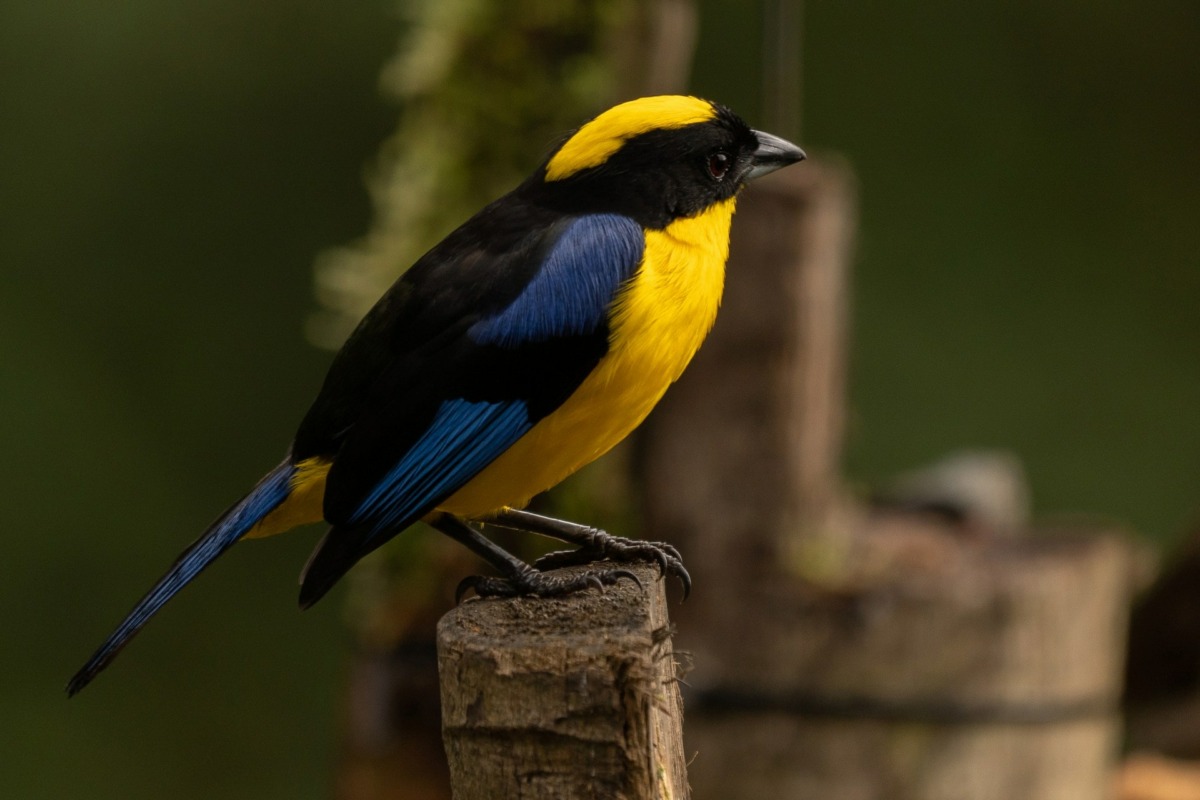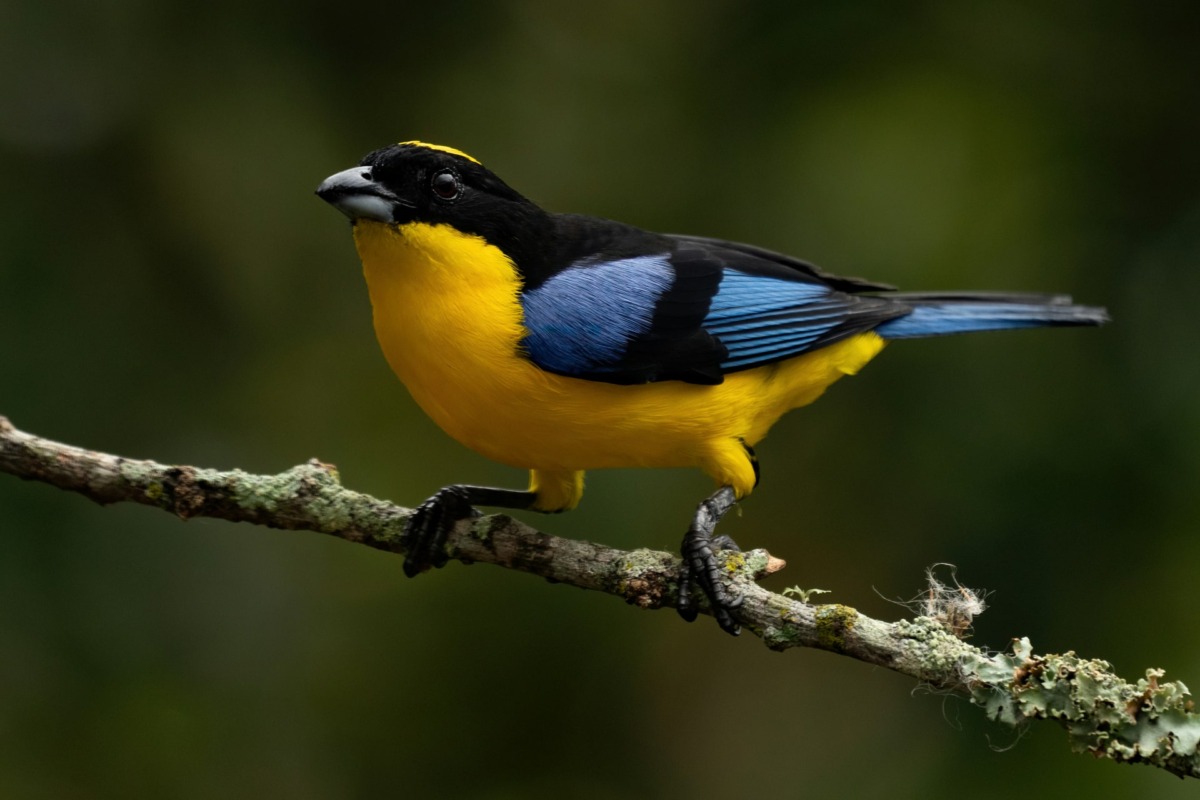
The Blue-winged Mountain Tanager (Anisognathus somptuosus) is a colorful bird species found in the mountainous regions of Colombia. It has a predominantly blue plumage, a black face mask, and white wing patches. It forages on fruits and insects, often seen in small flocks. It is known for its striking plumage and its melodious song.
Habitats & Distribution
The Blue-winged Mountain Tanager thrives in montane forests, particularly favoring the subtropical and tropical moist forests and cloud forests of the Andean regions. It is most commonly found at elevations ranging from 1,500 to 3,200 meters but may occasionally occur at lower altitudes. Geographically, this vibrant bird is distributed along the Andes in South America, extending from western Venezuela through Colombia and Ecuador to northern Peru. These areas provide the dense, humid forests and edge habitats that support the diverse plant and insect life integral to the tanager's diet and nesting requirements.
Behaviours & Reproduction
Blue-winged Mountain Tanagers exhibit a monogamous mating system, where pairs establish and defend territories together. The breeding season varies but generally aligns with periods of abundant food supply, ensuring optimal conditions for raising their young. Courtship behaviors include mutual feeding and synchronized fluttering displays, strengthening the pair bond. Nests are typically constructed by both partners in densely vegetated areas, often hidden among mosses and Bromeliaceae. The female primarily incubates the eggs, which are laid in small clutches, while the male actively defends the nest and forages. Parental care is prominent, with both parents sharing the responsibilities of feeding and protecting the chicks until they fledge. Socially, these birds are occasionally seen in mixed-species flocks outside the breeding season, which facilitates foraging efficiency and predator vigilance. Their conspicuous and vibrant plumage assists in territory defense and mate attraction, playing a crucial role in their reproductive success.
Diet
Fruits and insects.
Colors
Yellow below and black above with blue patch on shoulder and blue edges on wing and tail feathers
Fun Facts
Part of mixed-species flocks. It is often found in the mid to upper levels of the forest, actively foraging and singing from exposed perches.
Conservation Status & Efforts
The Blue-winged Mountain Tanager is currently listed as Least Concern by the IUCN, with its population considered stable. However, the species faces threats primarily from habitat loss due to deforestation and agricultural expansion in its Andean range. Fragmentation of its cloud forest habitat poses a significant risk to its long-term survival. Conservation efforts for the Blue-winged Mountain Tanager include the establishment of protected areas and national parks that encompass significant portions of its natural habitat. Additionally, reforestation projects and sustainable farming practices are being promoted to mitigate habitat destruction. Collaboration between local communities, governments, and conservation organizations is crucial to ensuring the effective preservation of this vibrant bird and its ecosystem.
Gallery