Kaokoland
A rugged, remote wilderness in Namibia's Kunene Region, Kaokoland captivates with its dramatic desert landscapes, nomadic Himba tribes, and rare desert-adapted elephants—perfect for intrepid adventurers seeking raw, untouched beauty.
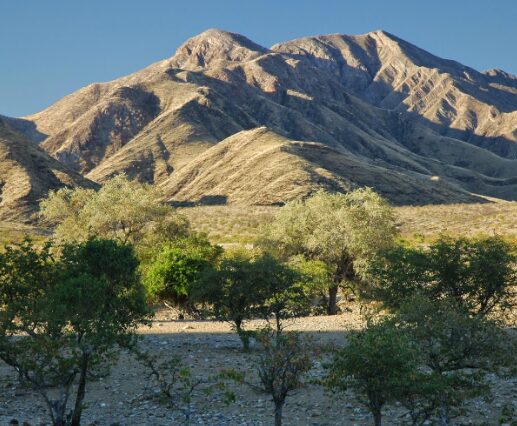
Kaokoland, a remote and untamed region in northern Namibia, is a land of stark beauty and raw solitude. Here, rugged mountains meet vast deserts, and the Himba people maintain ancient traditions. With its dramatic landscapes—from the ephemeral Hoanib River to the surreal fairy circles—this is a place for those who seek adventure beyond the ordinary, where nature and culture intertwine in timeless harmony.
Destination Facts
- Official Name: Kaokoland (also referred to as Kaokoveld)
- Type of Destination: Region
- Brief Description: A remote and rugged wilderness in northern Namibia, Kaokoland is celebrated for its dramatic landscapes, indigenous Himba culture, and rare desert-adapted wildlife.
- Location: Northwestern Namibia, within the Kunene Region, bordering Angola to the north and the Skeleton Coast to the west.
- Significance/Known For: One of the last true wilderness areas in Southern Africa, home to the semi-nomadic Himba people and desert-adapted elephants.
- Size/Area: Approximately 50,000 square kilometers.
- Main Attractions/Key Features:
- Epupa Falls, a series of cascades on the Kunene River
- The Himba villages, offering cultural immersion
- Hoanib Valley, known for its desert-adapted wildlife
- Best Time to Visit: May to October (dry season), when temperatures are milder and wildlife sightings more frequent.
- Entrance Fee/Ticket Info: N/A (some community-run attractions may request donations)
- Website: N/A (region-specific tourism information is typically found through Namibia’s national tourism board)
Essentials
- Best Months to Visit: January, February, May, June, July, August, September
History
A Land of Resilience and Tradition
Kaokoland, a remote and rugged region in Namibia's Kunene Region, is a place where history is etched into the landscape and carried by its people. Home to the semi-nomadic Himba, whose traditions have endured for centuries, this arid expanse has long been a refuge for those seeking isolation or resisting outside influence. Colonial boundaries and conflicts shaped its modern identity, but Kaokoland remains a testament to cultural preservation amidst harsh environmental and political challenges.
Key Historical Dates
- Late 19th Century: Kaokoland became a sanctuary for the Himba and Herero peoples fleeing German colonial expansion and the Herero-Nama genocide. Its inhospitable terrain deterred large-scale European settlement.
- 1920s–1940s: Administered as part of South West Africa under South African rule, Kaokoland was designated a "native reserve," further isolating its inhabitants from external pressures.
- 1980s: The region gained notoriety during the Namibian War of Independence as a corridor for SWAPO guerrillas, though its sparse population limited direct conflict.
- 1990s: Following Namibia's independence, Kaokoland was integrated into the Kunene Region, with gradual infrastructure improvements while retaining its cultural distinctiveness.
Cultural Continuity
Unlike much of Namibia, Kaokoland's history is less defined by colonial landmarks than by the persistence of the Himba way of life. Their pastoral traditions, intricate hairstyles, and ochre-covered skin reflect a deep connection to the land—one that has weathered droughts, border disputes, and the slow creep of modernity.
Tours and Day Trips
Popular Tours & Day Trips in Kaokoland
Himba Cultural Experience
A journey into the heart of Kaokoland offers the rare opportunity to engage with the Himba people, one of Namibia’s most iconic indigenous groups. Visitors can expect an intimate glimpse into their semi-nomadic lifestyle, from traditional homesteads to intricate adornments. The experience often includes storytelling, craft demonstrations, and insights into their pastoral traditions. Ideal for cultural enthusiasts and photographers, this half-day excursion is a profound encounter with resilience and heritage.
Epupa Falls Exploration
Just a few hours from Kaokoland’s rugged interior, the Epupa Falls cascade along the Kunene River, creating a dramatic contrast between desert and water. A guided tour here might include leisurely walks along the riverbanks, birdwatching for rare species, or cooling off in natural pools. The falls are particularly striking at sunset, when the light dances on the mist. Suitable for nature lovers and those seeking tranquility, this day trip is a refreshing escape.
Van Zyl’s Pass Adventure
For the intrepid traveler, a 4x4 expedition through Van Zyl’s Pass is a rite of passage. This challenging route winds through Kaokoland’s mountainous terrain, offering unparalleled views of desolate valleys and remote Himba settlements. The journey demands patience and skill, but rewards with raw, untouched landscapes. Best suited for adventure seekers and experienced off-roaders, this full-day excursion is as much about the journey as the destination.
Purros Conservancy Wildlife Drive
In the arid expanse of the Purros Conservancy, desert-adapted elephants and lions roam freely. A guided game drive here reveals how life thrives in this harsh environment, with tracks and sightings telling a story of adaptation. The conservancy also supports local Himba communities, adding a cultural layer to the experience. Ideal for wildlife enthusiasts and families, this half-day tour blends conservation with discovery.
Marienfluss Valley & Fairy Circles
The enigmatic fairy circles of the Marienfluss Valley—a vast, grassy plain dotted with mysterious bare patches—have puzzled scientists and travelers alike. A day trip here combines surreal landscapes with the chance to spot oryx and springbok. The valley’s remoteness adds to its allure, making it a favorite for those drawn to the unknown. Perfect for solo explorers and photographers, this excursion is a meditation on nature’s mysteries.
When to visit
Best Time to Visit Kaokoland
Kaokoland, a remote and rugged region in Namibia's Kunene Region, offers a unique blend of stark desert landscapes, rich cultural heritage, and extraordinary wildlife. The best time to visit depends on your preferences for weather, activities, and crowd levels. Below is a seasonal breakdown to help you plan your journey.
Seasonal Breakdown
Dry Season (May–October)
The dry season is the most popular time to visit Kaokoland, characterized by mild temperatures and minimal rainfall. Days are warm (20–30°C), while nights can be chilly, especially in June and July (5–15°C). The arid conditions make this period ideal for exploring the region's dramatic landscapes and encountering desert-adapted wildlife, such as the famous desert elephants.
- Pros: Optimal for 4x4 adventures, hiking, and wildlife viewing. Roads are more accessible, and water sources are concentrated, attracting animals.
- Cons: Peak tourist season, so accommodations may be booked well in advance. Dust and wind can be occasional nuisances.
Wet Season (November–April)
The wet season brings sporadic rainfall, higher humidity, and temperatures ranging from 25–40°C. While the landscape briefly transforms with sparse greenery, travel can be challenging due to flash floods and muddy, impassable roads. This period is less frequented by tourists, offering a more solitary experience.
- Pros: Fewer visitors, dramatic skies, and the chance to witness ephemeral rivers in flow. Birdlife is abundant.
- Cons: Extreme heat and limited accessibility to remote areas. Some lodges may close or reduce services.
Overall Recommendation
The dry season (May–October) is generally the best time to visit Kaokoland, particularly for those seeking adventure and wildlife. For travelers who prefer solitude and don’t mind the heat, the shoulder months of April or November offer a balance between accessibility and fewer crowds.
Considerations
Kaokoland remains off the beaten path, so even during peak season, crowds are minimal compared to Namibia’s more popular destinations. However, accommodations in the region are limited, so booking early is advisable. Prices are relatively stable year-round, though some lodges may offer discounts during the wet season.
What to pack
What to Pack for Kaokoland
Kaokoland, a remote and rugged region in northern Namibia, demands thoughtful preparation. Its arid climate, sparse infrastructure, and striking landscapes require items that ensure comfort, safety, and practicality.
Essentials for the Arid Wilderness
- High-SPF Sunscreen & Wide-Brimmed Hat: The sun is relentless, and shade is scarce. Protection is non-negotiable.
- Lightweight, Long-Sleeved Clothing: Shields against sunburn and dust while allowing breathability.
- Sturdy Closed-Toe Shoes: For navigating rocky terrain and avoiding thorny plants or scorpions.
- Reusable Water Containers (5L+): Water sources are rare; self-sufficiency is key.
For the Unpredictable Elements
- Windproof Jacket & Scarf: Dust storms and chilly nights are common.
- Portable Power Bank or Solar Charger: Electricity is scarce; keep devices charged for navigation.
- Basic First-Aid Kit: Include antiseptics, bandages, and remedies for dehydration or heat exhaustion.
Practical Additions
- Binoculars: For spotting desert-adapted wildlife like elephants or lions from a safe distance.
- Cash in Small Denominations (NAD): Few establishments accept cards, and change is limited.
- Ziplock Bags or Dry Sacks: Protect electronics and documents from dust and sand.
Culture
The Himba: Guardians of Tradition
Kaokoland is the ancestral home of the Himba people, one of Namibia’s most culturally distinct groups. Unlike other regions where modernity has diluted traditions, the Himba here maintain their semi-nomadic lifestyle with remarkable resilience. Women, adorned with otjize—a mixture of butterfat and ochre—embody a living artistry, their intricate hairstyles and jewelry signaling age, marital status, and social standing. Visitors may witness the rhythmic chanting of omitandu (praise songs) or the quiet rituals of firekeeping, a sacred duty tied to ancestral veneration.
Language & Oral Traditions
The Himba speak OtjiHimba, a dialect of Herero, rich in proverbs and oral histories. Unlike urban centers where English dominates, here, language remains deeply tied to the land. Elders recount the ozondjise (stories of origin), often under the shade of a mopane tree, weaving tales of Mukuru (the Creator) and the sacred cattle that sustain their way of life.
Survival & Symbiosis
Kaokoland’s harsh, arid landscape shapes its culture. The Himba’s cattle—long-horned and lean—are not merely livestock but extensions of family lineage. Milk, blood, and maize form the staples of their diet, prepared in clay pots over open fires. Visitors might be offered omahangu (millet porridge), a gesture of hospitality, though it’s polite to accept with both hands as a sign of respect.
Etiquette Notes
- Always ask permission before photographing individuals—privacy is valued, and some rituals are sacred.
- Remove shoes before entering a homestead; the okuruwo (central fire) is a spiritual focal point.
- Gifts like sugar or tobacco are appreciated but avoid alcohol, as it disrupts social harmony.
Crafts & Material Culture
Himba artisans craft jewelry from iron, shells, and leather, each piece imbued with meaning. The ekori (headpiece) worn by married women, for instance, symbolizes fertility. Nearby, the Damara people (a minority here) produce distinctive woven baskets, their geometric patterns reflecting ancient San influences—a subtle testament to Kaokoland’s layered history.
Festivals & Seasonal Rhythms
Unlike scripted tourist events, Kaokoland’s celebrations are organic. The annual Ovitoto festival marks the rainy season, with young men competing in cattle-herding skills. Meanwhile, the Efundula (girls’ initiation) is a private affair, but visitors might hear the echoes of singing from distant villages at dusk.




