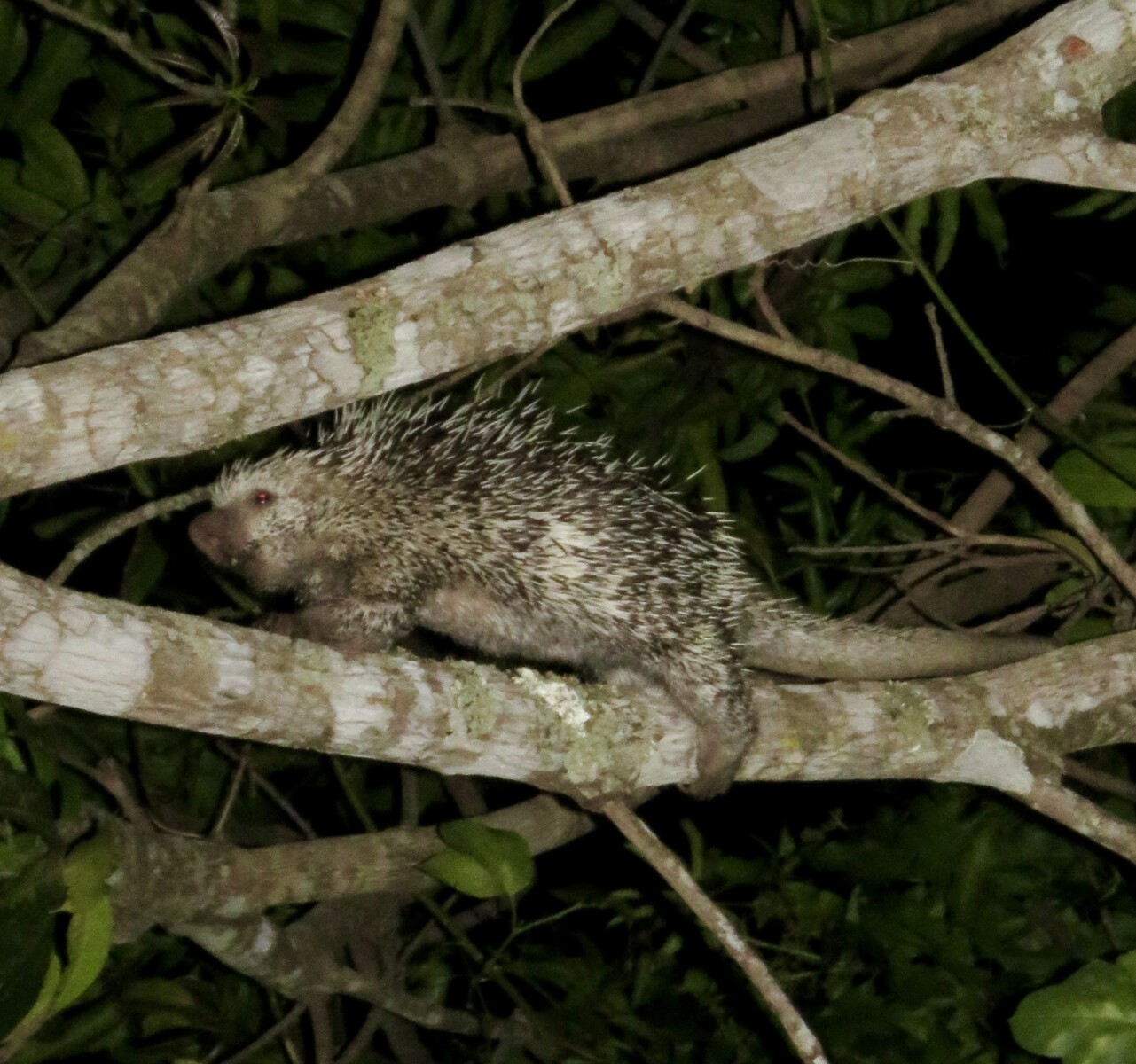
Le porc-épic brésilien a une fourrure brun foncé ou noire et de longs piquants qui recouvrent son corps. Il a un corps robuste, des pattes courtes et une longue queue préhensile.
Habitats et répartition
The Brazilian porcupine primarily inhabits the tropical and subtropical rainforests of South America. It can be found in a geographical range that includes the northern regions of Argentina, the eastern areas of Colombia, and throughout Brazil, extending into parts of Bolivia, Paraguay, and Venezuela. This arboreal mammal prefers dense, humid forests, where it has access to a rich supply of fruits, leaves, and bark that constitute its diet.
In addition to rainforests, the Brazilian porcupine is also found in secondary growth forests, and it can adapt to disturbed habitats such as plantations and agricultural areas. Its prehensile tail facilitates its life in the trees, allowing it to navigate the forest canopy with ease. This adaptability to various forested environments helps the species to maintain a relatively widespread distribution across its range.
Comportements et reproduction
The Brazilian Porcupine, primarily nocturnal, exhibits solitary behavior, usually coming together only for mating purposes. Mating occurs primarily during the rainy season, when males seek out females through their strong sense of smell. During courtship, males may vocalize, and there may be some minor aggressive interactions, but generally, the process is relatively peaceful. After mating, the male leaves, and the female undertakes the responsibility of raising the offspring alone.
Gestation lasts about 195 days, resulting in the birth of a single offspring. The newborn porcupine, which is precocial, meaning it is born well-developed, has open eyes and a full coat of soft quills that harden after a few days. The young remain dependent on the mother for nutrition and protection, gradually learning to forage on their own. Weaning occurs after about 10 weeks, but juveniles often stay close to the mother for several months before becoming fully independent. This reproductive strategy ensures the young are relatively self-sufficient shortly after birth, aiding their survival in the wild.
Régime alimentaire
Plant matter, bark, leaves, fruits
Couleurs
Dark brown or black
Faits amusants
These porcupines are primarily arboreal and are excellent climbers. They feed on a variety of plant matter, including bark, leaves, and fruits.
Statut de conservation et efforts
The Brazilian Porcupine (Coendou prehensilis) is currently listed as "Least Concern" by the IUCN, reflecting its relatively stable population. However, this species faces ongoing threats that could impact its numbers in the future, primarily due to habitat loss from extensive deforestation and human encroachment within its native range in South America. Illegal hunting also poses a risk, though less significant compared to habitat destruction.
Conservation efforts for the Brazilian Porcupine include habitat protection and reforestation projects which are crucial in maintaining their natural environment. Several protected areas within their range help shield significant portions of their habitat from deforestation. Additionally, education and awareness campaigns aim to reduce illegal hunting and encourage local communities to value and protect this unique species. Continued monitoring and research are essential to ensure that the current population trends do not decline sharply under encroaching threats.




