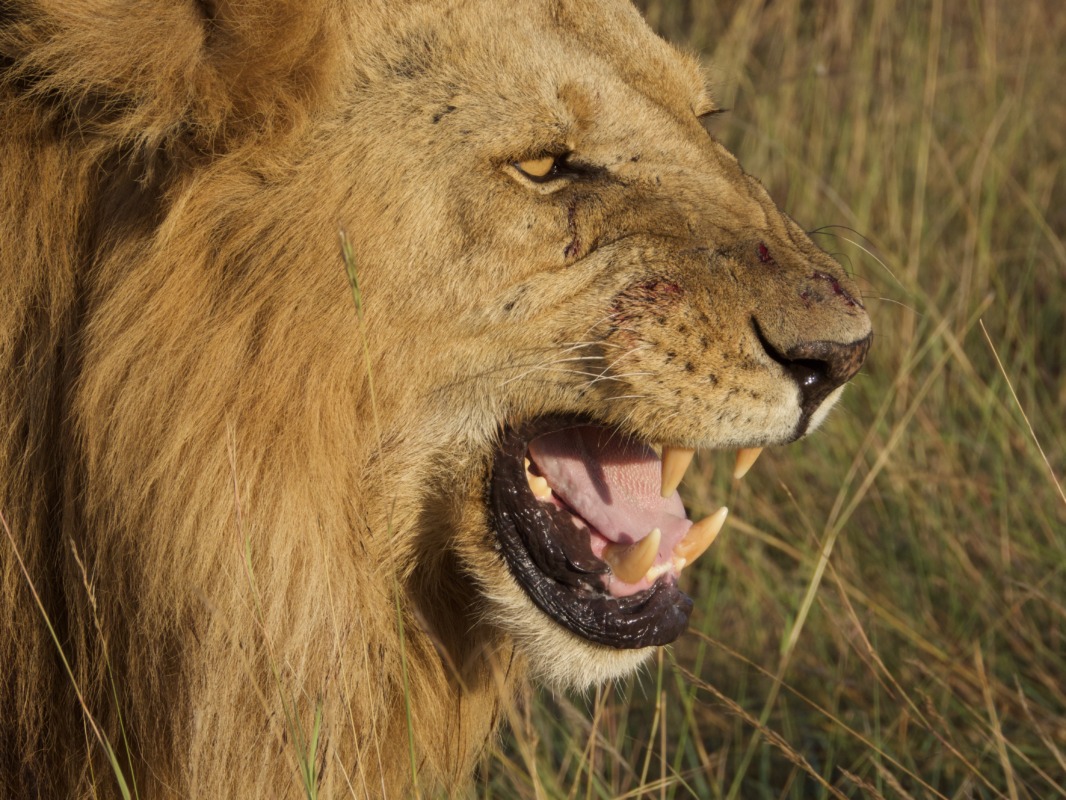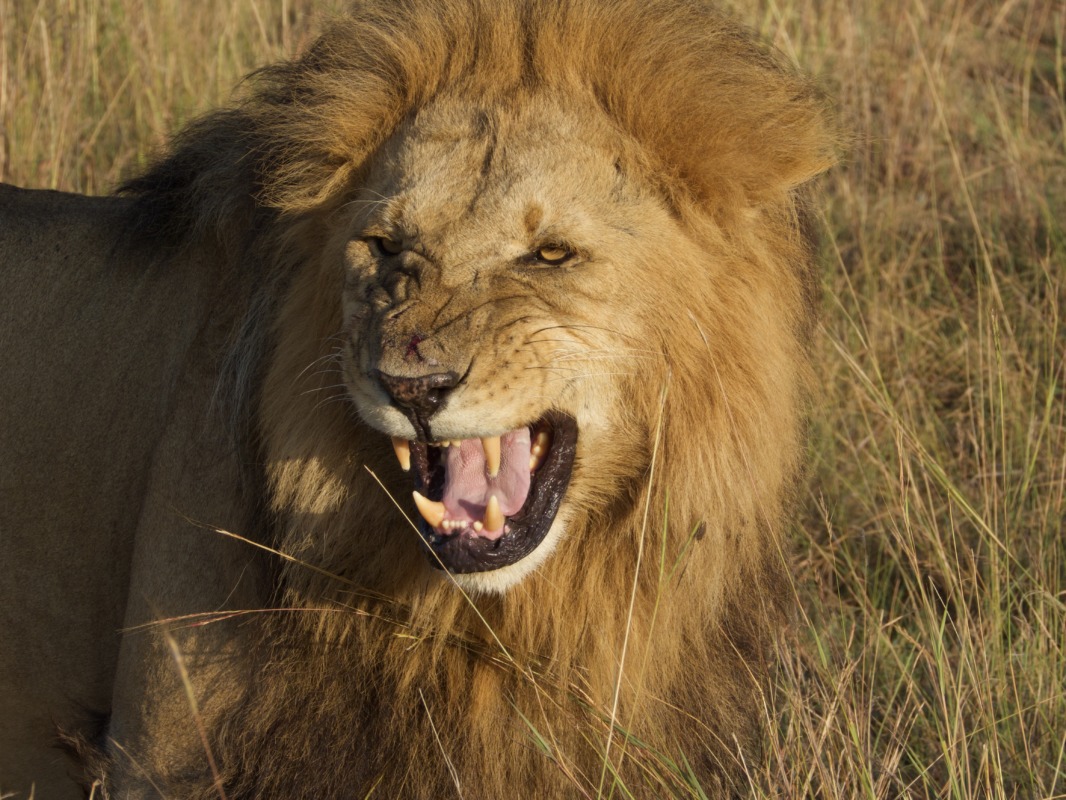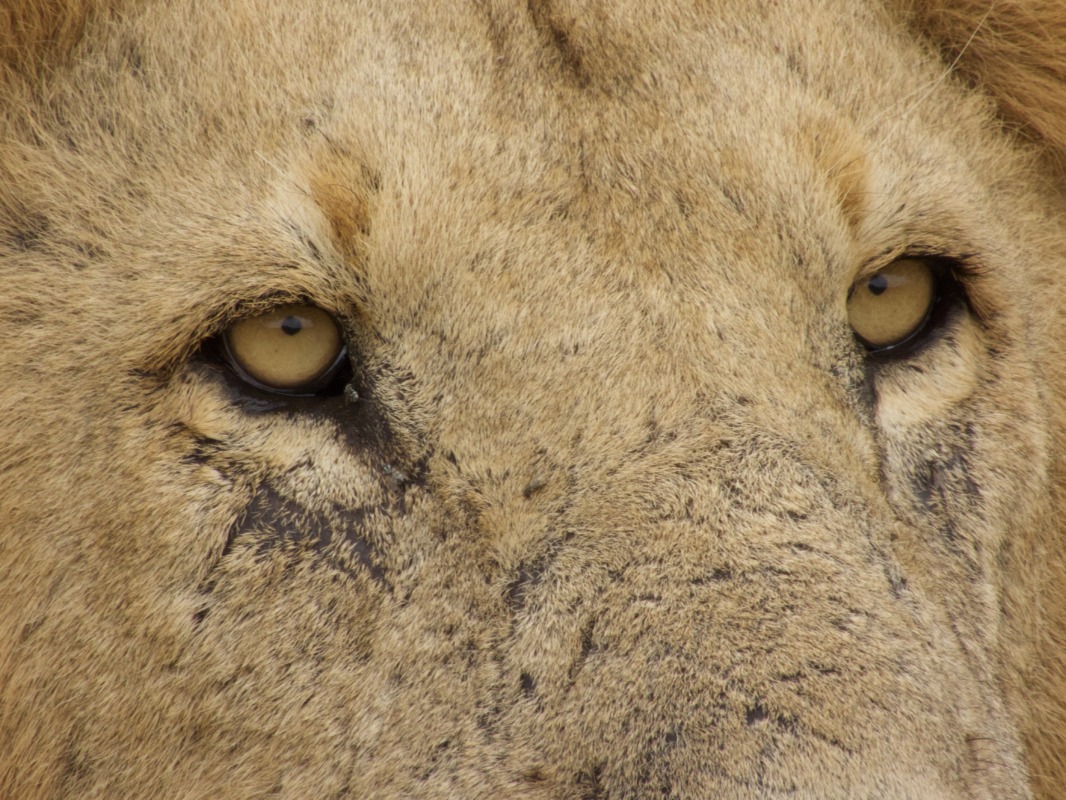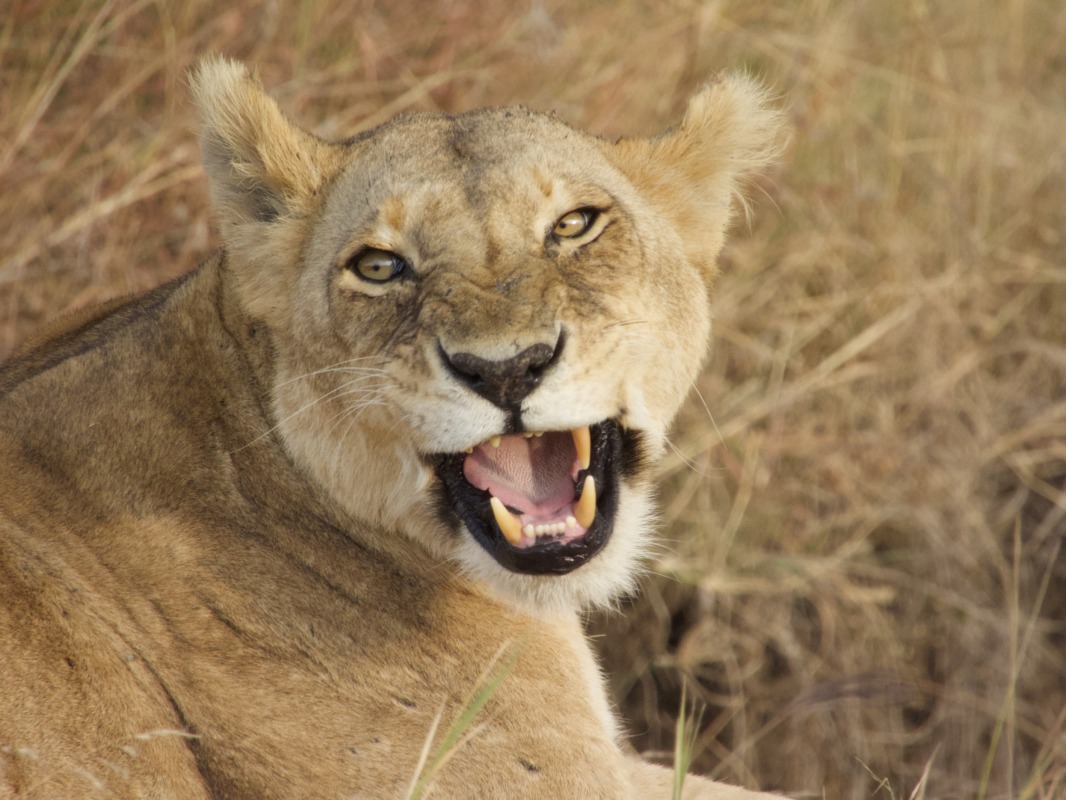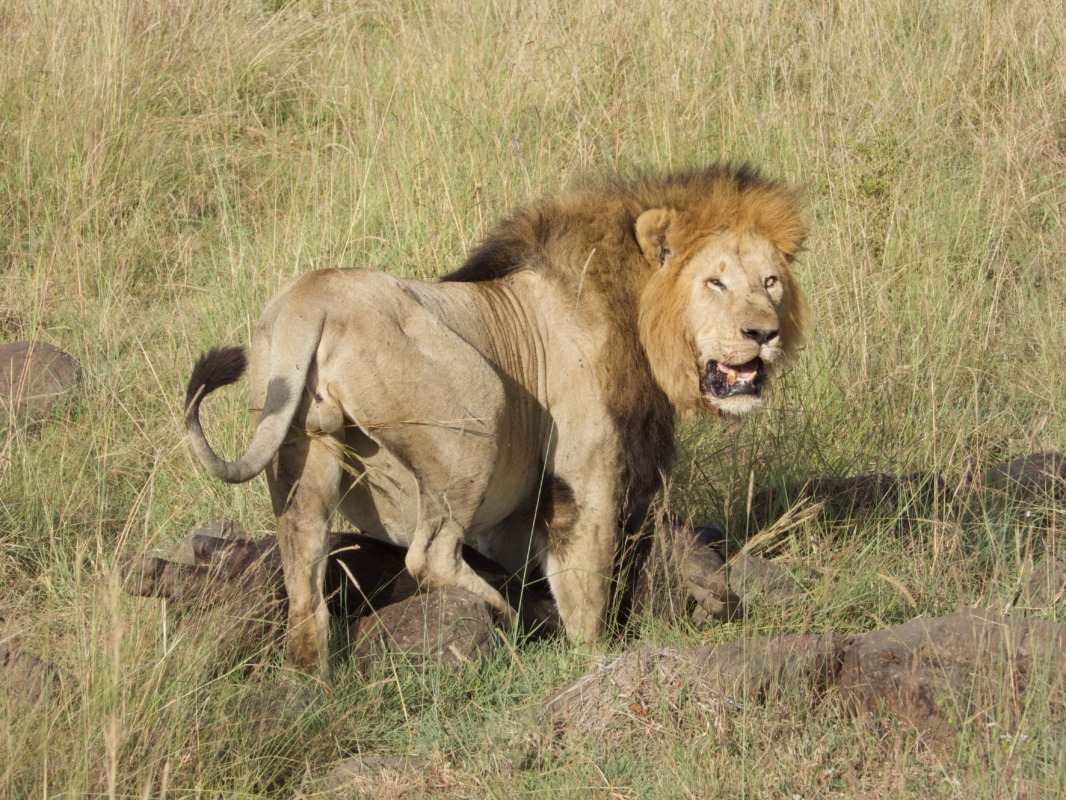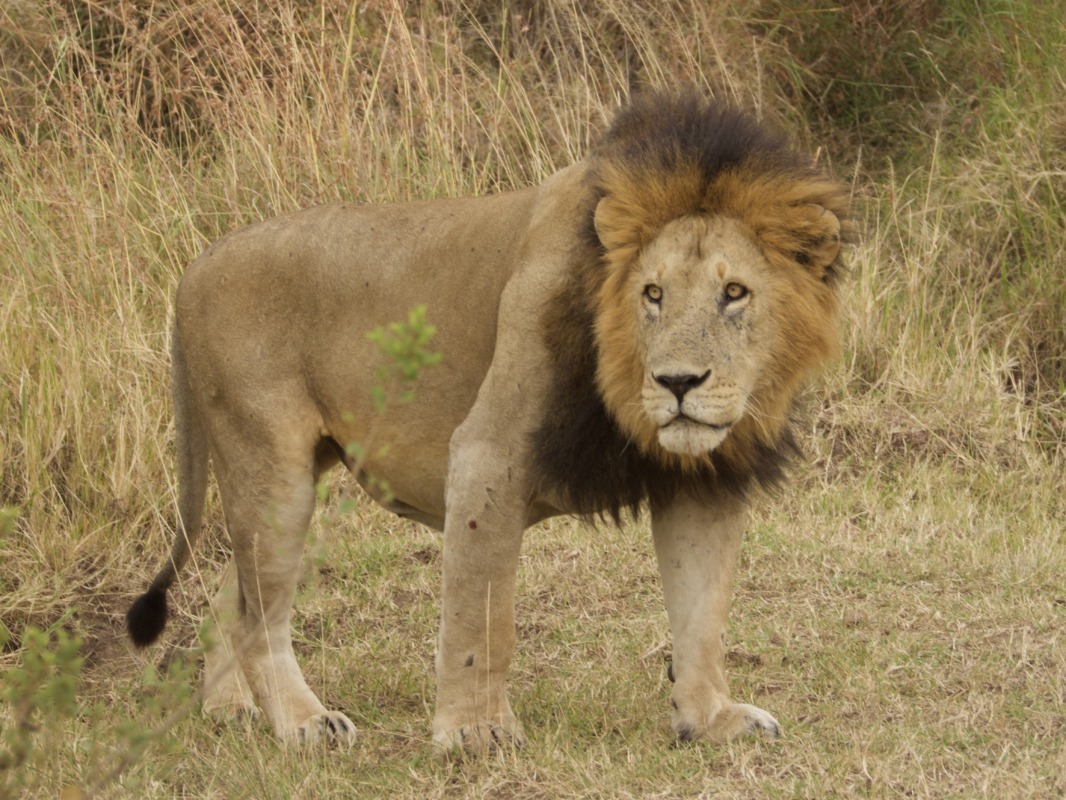
The Lion (Panthera leo), often dubbed as the "King of the Jungle," is a majestic and powerful big cat renowned for its distinctive mane, which is more prominent and darker in males. Their tawny fur, muscular build, and imposing presence make them one of the most recognizable animals in the wild. Male lions can weigh up to 250 kg (550 lbs) and grow over 2.7 meters (9 feet) in length, including their tail. These social felines live in prides, comprising related females, their offspring, and a small number of adult males. With a thunderous roar that can be heard up to 8 kilometers (5 miles) away, lions are strategically supreme hunters, relying on their coordinated teamwork and strength to topple large prey. Their keen eyesight allows them to function effectively during both day and night, although they prefer hunting under the cover of darkness. Endangered by habitat loss and human conflict, lions remain symbols of courage and nobility in various cultures around the world.
Habitats et répartition
Lions primarily inhabit savannas, grasslands, and open woodlands, thriving in regions that provide ample prey and minimal dense forest cover. These environments offer the open space for hunting and the scattered trees or bushes for shelter and shade. They are known to avoid dense forests and overly arid deserts, though they can sometimes be found in fringe areas where the savanna meets other biomes.
Geographically, lions are predominantly found in sub-Saharan Africa, with significant populations in countries such as Tanzania, Botswana, South Africa, and Kenya. A small, isolated population also exists in the Gir Forest National Park in the Indian state of Gujarat. Historically, lions had a much broader range, extending into parts of Europe and Asia, but their habitat has been drastically reduced due to human encroachment, hunting, and habitat destruction.
Comportements et reproduction
Lions exhibit a unique social structure, forming groups called prides, typically composed of related females, their offspring, and a small number of adult males. Female lions, usually sisters or cousins, take on the primary roles of hunting and caring for the young, while males defend the pride's territory from rivals. The reproductive strategy involves males competing for dominance over a pride; the victorious males earn mating rights with the females. Female lions in a pride often synchronize their reproductive cycles and give birth around the same time, allowing for communal care of the cubs. Cubs are weaned at around six to seven months, but they remain dependent on the pride until they are about two years old. The cooperative nature of pride life and synchronized births enhance the survival prospects of the offspring in the harsh environments they inhabit.
Régime alimentaire
Lions (Panthera leo) are apex predators and primarily carnivorous, relying heavily on medium- to large-sized ungulates for sustenance. Their diet predominantly includes animals such as zebras, wildebeests, and antelopes, but they are also known to hunt larger prey like buffaloes and even young elephants when the opportunity arises. Interestingly, lions are opportunistic feeders and won't hesitate to scavenge from other predators or consume smaller animals like hares and birds if larger prey is scarce. A lion's hunting strategy often involves teamwork, with females typically doing most of the hunting in well-coordinated group efforts to increase success rates. Additionally, lions can eat up to 15% of their body weight in a single meal and can survive without water for extended periods, obtaining necessary moisture from their prey.
Couleurs
The lion (Panthera leo) typically has a tawny yellow or light beige coat, which provides effective camouflage in the grassy savannas and wooded areas where it primarily resides. Male lions are distinguished by their prominent manes, which can vary in color from light brown to black, with darker manes often indicating older, more dominant individuals. Lions also have a white belly and the backs of their ears are black, which may help cubs follow their mothers through tall grass.
Faits amusants
Lions, known for their majestic manes, exhibit some quirky behaviors and fascinating adaptations. Unlike most big cats, lions are social animals living in prides that typically consist of related females, their offspring, and a small number of adult males. They showcase cooperative hunting strategies, often using the lionesses’ agility and the males’ brute strength to tackle large prey such as buffalo and even elephants. Lions also possess a unique adaptation called "silent communication," where they use body language and facial expressions to coordinate and strengthen their social bonds. Interestingly, male lions often spend a considerable amount of their day sleeping—up to 20 hours—to conserve energy for high-intensity activities like hunting and defending their territory.
Statut de conservation et efforts
The conservation status of the lion (Panthera leo) is currently classified as Vulnerable on the IUCN Red List, with certain subpopulations deemed Critically Endangered. Lion populations have experienced a significant decline, decreasing by roughly 43% over the past two decades, primarily due to habitat loss, conflict with humans, and poaching. The primary threats to their survival include illegal hunting, depletion of their natural prey base, and expanding human settlements that lead to increased human-wildlife conflict.
Conservation measures are being implemented to address these challenges, such as the establishment and management of protected areas, anti-poaching initiatives, and community-based conservation programs. Efforts like the creation of wildlife corridors and the introduction of better livestock management practices aim to reduce human-lion conflicts. International collaborations and funding mechanisms, such as those facilitated by organizations like the Lion Recovery Fund, also play a crucial role in supporting conservation activities across range states.
Galerie