Chronicles of Guatemala’s Past
Découvrez la riche histoire du Guatemala, de l'ancienne civilisation maya au renouveau culturel moderne.
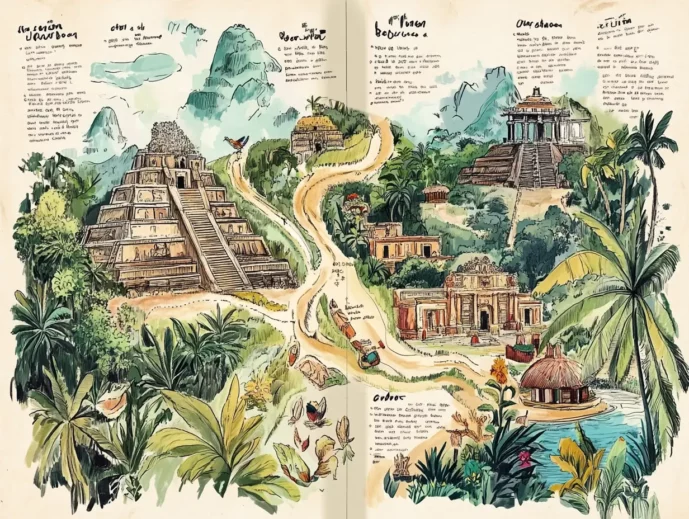
Chronicles of Guatemala’s Past
Introduction
Guatemala, a country rich in history and culture, offers a fascinating tapestry woven from the threads of ancient civilizations, colonial influences, and modern developments. This article explores the chronicles of Guatemala’s past, providing a comprehensive look into the nation’s storied history.
Civilisations anciennes
Les Mayas
The Mayan civilization is perhaps the most renowned of Guatemala’s ancient cultures. Flourishing between 2000 BC and AD 1500, the Mayans are celebrated for their advances in mathematics, astronomy, and writing. Key cities like Tikal and Yaxhá were centers of power, featuring impressive pyramids and sophisticated urban planning.
Les Olmèques
Though more prominently associated with southern Mexico, the Olmecs also influenced Guatemala. They are often considered the "mother culture" of Mesoamerica, laying the groundwork for subsequent civilizations with their distinctive art, colossal heads, and early advancements in calendar systems.
Le Pipil
The Pipil people, Nahuatl-speaking descendants of the Toltecs, settled in the region during the late Postclassic period. They left their mark through agricultural practices and unique cultural traits, blending with other Mesoamerican influences.
Conquête espagnole
Arrivée des conquistadors
The Spanish conquest dramatically reshaped Guatemala. In 1523, Pedro de Alvarado, a lieutenant of Hernán Cortés, led the brutal campaign against the indigenous populations. The impact of Old World diseases and superior weaponry ushered in a new era.
La chute des cités mayas
Despite their resilience, many Mayan cities fell to the Spanish conquest. Notable strongholds like Iximché and Q’umarkaj succumbed, leading to the end of Mayan sovereignty and the beginning of Spanish dominance.
Villes coloniales
The Spanish established numerous colonial cities, with Santiago de los Caballeros de Guatemala (modern-day Antigua) becoming the cultural and administrative heart of Central America. These cities featured Spanish baroque architecture, cathedrals, and plazas that still captivate visitors today.
L'ère coloniale
Création d'Antigua
Founded in 1543, Antigua became one of the most important cities in the Spanish Americas. Its well-preserved architecture and cobblestone streets tell tales of a time when it was a center of art, education, and commerce.
Assimilation culturelle
The colonial era saw significant cultural assimilation as indigenous practices blended with Spanish customs. This syncretism is evident in Guatemalan festivals, cuisine, and religious practices.
Changements économiques
The colonial economy relied heavily on agriculture, particularly the cultivation of cacao, indigo, and later, coffee. The encomienda system exploited indigenous labor, leading to profound social and economic disparities.
Indépendance
Lutte pour la liberté
The early 19th century was a period of struggle for independence across Latin America. Inspired by the successes of neighboring countries, Guatemala began its fight for freedom from Spanish rule.
Déclaration d'indépendance
On September 15, 1821, Guatemala declared its independence from Spain. The event was relatively peaceful compared to other Latin American revolutions, but it marked the beginning of a new era.
Les défis du début de la République
The nascent republic faced numerous challenges, from political instability to economic hardships. Power struggles and regional conflicts hampered efforts to create a unified and prosperous nation.
Les bouleversements du 20e siècle
Instabilité politique
The 20th century was marked by significant political instability. Coups, dictatorships, and foreign interventions frequently disrupted governance and progress.
Guerre civile
From 1960 to 1996, Guatemala endured a brutal civil war. The conflict resulted in the loss of hundreds of thousands of lives and left deep scars on the national psyche.
Accords de paix
The signing of the peace accords in 1996 ended the civil war. While it brought hope for reconciliation and rebuilding, the path to recovery has been long and arduous.
Patrimoine culturel
Fêtes traditionnelles
Guatemala’s cultural heritage is vibrant and diverse. Traditional festivals like Semana Santa in Antigua and Fiesta de Santo Tomás in Chichicastenango showcase the nation’s rich traditions and communal spirit.
Art et artisanat indigènes
Indigenous art and craft are integral to Guatemalan identity. Visit markets and you’ll find intricate textiles, pottery, and woodwork reflecting centuries-old techniques and motifs.
Langues et traditions
Guatemala is home to 23 indigenous languages, with K’iche’, Q’eqchi’, and Kaqchikel being among the most spoken. These languages, along with traditional customs, are vital components of the nation’s cultural tapestry.
Sites archéologiques
Tikal
The ruins of Tikal are a UNESCO World Heritage site and one of Guatemala’s most iconic landmarks. The ancient city, hidden in the Petén rainforest, boasts towering pyramids and a rich history of Mayan civilization.
Quiriguá
Quiriguá is renowned for its intricately carved stelae and zoomorphs. These monumental stone sculptures offer insights into the artistic and political life of the Classic Mayan period.
Yaxhá
Less visited but equally fascinating, Yaxhá provides a glimpse into another significant Mayan city. Its location near a beautiful lake makes for a serene and enlightening exploration.
Développements modernes
Croissance économique
In recent decades, Guatemala has experienced significant economic growth. The expansion of industries such as textiles, agriculture, and tourism has contributed to a more robust economy.
Changements sociaux
Social changes are evident as well, with increased efforts towards gender equality, education, and healthcare. However, challenges like poverty and inequality remain pressing issues.
Progrès technologiques
Technological advancements are transforming Guatemala. From improved internet connectivity to innovative startups, the country is progressively integrating into the global digital economy.
Conclusion
The chronicles of Guatemala’s past are a testament to its resilience and rich cultural heritage. From the ancient Mayans to modern developments, each era has left an indelible mark on the nation’s identity. Whether you’re exploring archaeological sites or participating in vibrant festivals, Guatemala offers a journey through time unlike any other.




