Cuba : Un aperçu historique concis
Cet article donne un aperçu bref mais complet de l'histoire complexe de Cuba, depuis la colonisation jusqu'à aujourd'hui.
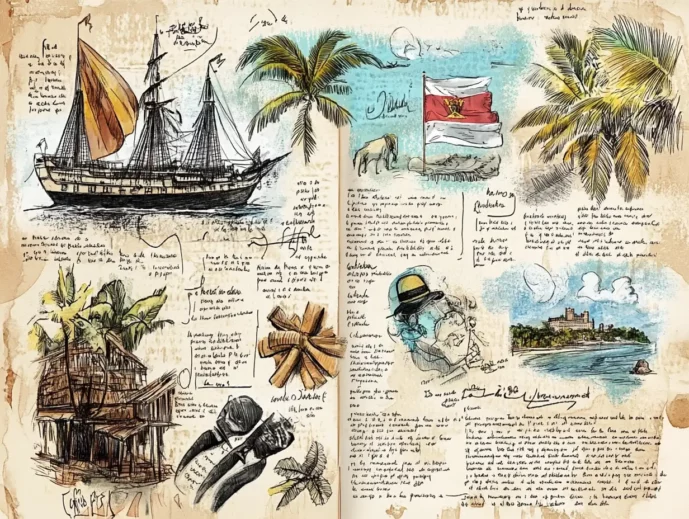
Cuba : Un aperçu historique concis
L'ère précoloniale
Populations autochtones
Before Columbus ever took a misguided route to find spices, Cuba was inhabited by indigenous groups such as the Taíno, Guanahatabey, and Ciboney peoples. They lived relatively peaceful lives, relying on fishing, hunting, and rudimentary agriculture.
Pratiques agricoles
The indigenous populations practiced slash-and-burn agriculture, cultivating crops like cassava, maize, and sweet potatoes. They also developed sophisticated fishing techniques, using canoes for coastal navigation.
Colonisation espagnole
Arrivée de Christophe Colomb
In 1492, Christopher Columbus stumbled upon Cuba during his famous "New World" expedition. He claimed the island for Spain, unintentionally setting the stage for centuries of colonial exploitation.
Création de La Havane
By 1519, the Spanish had established Havana as a major port city. It quickly became a vital hub for Spanish fleets, serving as a key point for refueling and restocking during voyages between Europe and the Americas.
Travail forcé et système de l'Encomienda
The Spanish introduced the encomienda system, which forced indigenous people into labor under brutal conditions. The local populations were decimated by diseases brought by Europeans and the harsh working conditions.
Économie coloniale
Plantations de sucre
Cuba’s fertile land proved ideal for sugar cane cultivation, turning the island into one of the world’s largest sugar producers by the 18th century. This wouldn’t have been possible without an influx of enslaved Africans.
Traite des esclaves
To meet the labor demands of their plantations, the Spanish engaged in the transatlantic slave trade. Thousands of Africans were forcibly brought to Cuba, their labor contributing significantly to the island’s economic wealth.
Les guerres d'indépendance
Ten Years’ War
Cuba’s first major bid for independence, the Ten Years’ War (1868-1878), was a bloody conflict that ended in a stalemate, but it sowed the seeds for future rebellions.
La petite guerre
The Little War (1879-1880) was a short-lived but significant follow-up conflict, demonstrating the growing unrest and desire for independence among Cubans.
Guerre d'indépendance
The Cuban War of Independence (1895-1898) was the final and decisive conflict that saw Cuban rebels, led by figures like José Martí, challenging Spanish colonial rule. It eventually drew in the United States.
Influence des États-Unis
Guerre hispano-américaine
The U.S. entered the fray in 1898, leading to the Spanish-American War. Spain was swiftly defeated, and Cuba’s fate was handed over to American control, much to the chagrin of Cuban nationalists.
Amendement Platt
In a classic move of "freedom with strings attached," the Platt Amendment (1901) allowed the U.S. to intervene in Cuban affairs, effectively making Cuba a pseudo-colony for the first half of the 20th century.
République de Cuba
Début de la République
The early years of the Cuban Republic were marred by political instability. Although Cuba was independent on paper, American influence and internal corruption kept the island from flourishing.
Instabilité politique
L'agitation politique était endémique et a conduit à une série de coups d'État et de régimes autoritaires. Au milieu du XXe siècle, Cuba était un terrain de jeu pour les mafieux américains et les politiciens corrompus.
Révolution cubaine
L'ascension de Fidel Castro
Enter Fidel Castro—a charismatic leader who promised to rid Cuba of its woes. His revolutionary movement gained traction, especially among disillusioned youth and the rural poor.
Renversement de Batista
In 1959, Castro’s forces overthrew the despised dictator Fulgencio Batista, ushering in a new era of socialist governance that would forever change Cuba’s geopolitical landscape.
L'ère de la guerre froide
Invasion de la Baie des Cochons
The U.S. wasn’t thrilled. In 1961, they launched the Bay of Pigs Invasion, a botched attempt to overthrow Castro that only ended up solidifying his power and embarrassing the U.S.
Crise des missiles de Cuba
Things got even spicier in 1962 during the Cuban Missile Crisis, when the Soviet Union placed nuclear missiles in Cuba, bringing the world to the brink of nuclear war. Spoiler alert: we’re still here.
Alliance soviétique
For decades, Cuba was a loyal ally to the Soviet Union, relying heavily on Soviet subsidies and trade to keep its economy afloat.
Période post-soviétique
Difficultés économiques
The collapse of the Soviet Union in 1991 hit Cuba like a ton of bricks, leading to severe economic hardships. Food shortages and blackouts became the norm.
Période spéciale
Cuba entered the Special Period, a time of extreme austerity. The government introduced reforms to attract tourism and foreign investment, albeit reluctantly.
Développements récents
Raúl Castro’s Reforms
In recent years, Raúl Castro implemented several economic reforms, allowing limited private enterprise and foreign investment, which brought some relief to the struggling economy.
Relations entre les États-Unis et Cuba
The relationship between U.S. and Cuba thawed slightly under the Obama administration, but recent developments have been a mixed bag, swinging between cautious optimism and renewed tensions.
Climat politique actuel
Today, Cuba remains a one-party state under the Communist Party. While the island grapples with economic challenges and political dissent, it continues to captivate the world’s imagination—a testament to its rich, complicated history.




