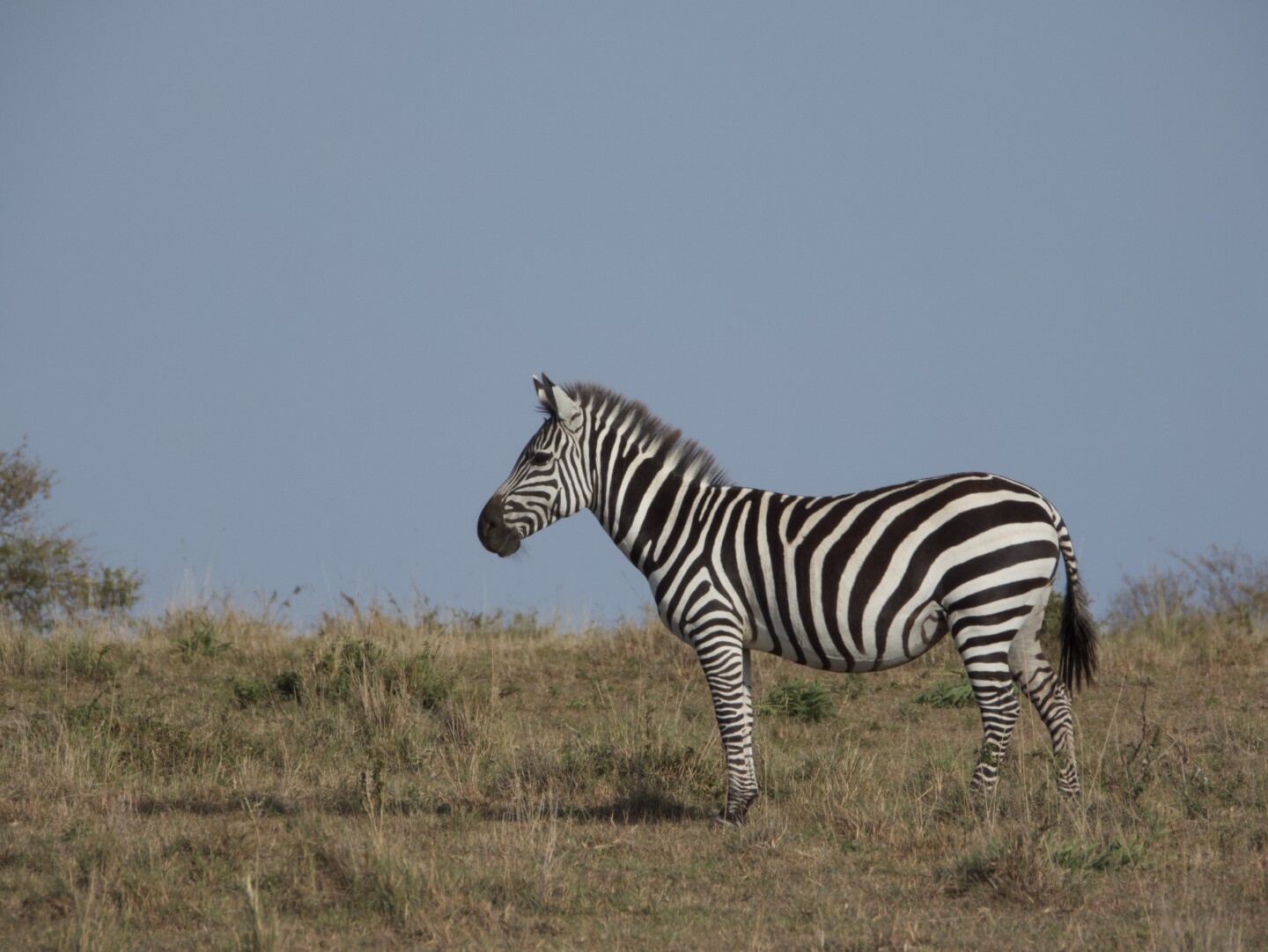
The Plains Zebra (Equus quagga), distinguishable by its striking black-and-white striped coat, is one of Africa’s most iconic animals. These stripes, unique to each individual like fingerprints, serve various purposes including camouflage, predator confusion, and social signaling. Typically standing about 4.5 feet at the shoulder and weighing up to 770 pounds, plains zebras exhibit a robust and sturdy physique perfectly adapted to the savannas, grasslands, and open woodlands they inhabit. They are highly social creatures, often seen in large herds that can sometimes number in the thousands, and exhibit complex social structures centered around a dominant stallion. These animals are also notable for their constant grazing, playing a crucial role in the ecosystem by maintaining the health of grasslands. Despite their hardy nature, plains zebras face threats from habitat loss and predation, making conservation efforts critical for their continued survival.
Habitats e distribuição
Plains Zebras are primarily found in the savannas, grasslands, and open woodlands of eastern and southern Africa. They thrive in environments with ample access to grasses, their primary food source, and are often seen migrating in large herds across the Serengeti in Tanzania and Kenya, following the seasonal rains in search of greener pastures.
Their geographical range spans from southern Ethiopia down through East Africa to as far south as eastern South Africa. They are highly adapted to the varied landscape within this range, from the arid regions of Namibia and Botswana to the more lush, temperate environments of the Great Rift Valley, demonstrating their versatility in different climatic conditions.
Comportamentos e reprodução
Plains zebras exhibit a polygynous mating system where a single stallion typically mates with multiple mares within his harem. Harem sizes vary but usually consist of one stallion, several mares, and their offspring. When a young male reaches maturity, he leaves his natal harem to form or seize his own group, often engaging in fierce battles with other stallions to secure mares. The social structure is relatively stable, with strong bonds between the stallion and his mares.
Reproduction in plains zebras is influenced by the availability of resources and seasonal conditions. Mares typically give birth to a single foal after a gestation period of about 12-14 months. Foals are able to stand and run within hours of birth, which is crucial for their survival in the predator-rich environment. The mother takes an active role in nurturing and protecting the young, while the stallion defends the harem from potential threats. This tight-knit social unit ensures both the protection of the group and the continuation of the species.
Dieta
The Plains Zebra (Equus quagga) primarily feeds on a variety of grasses, which constitute around 90% of their diet. They consume both short grasses during the wet season and taller grasses during the dry season. Zebras are also known to eat leaves, bark, shrubs, and herbs when grass is scarce, displaying a level of dietary adaptability. An interesting fact about their feeding behavior is that they have a tendency to graze for up to 20 hours a day and often travel in large herds, which helps them minimize the risk of predation while they feed. Their digestive system is adapted to process large quantities of low-nutrient forage efficiently, allowing them to thrive in the diverse habitats of the African savanna.
Cores
The Plains Zebra features a striking black and white striped pattern that covers its entire body. Each individual zebra's stripe pattern is unique, akin to human fingerprints. The stripes are believed to offer camouflage through disruptive coloration, confusing predators by creating a visual distortion when zebras are in groups. The belly is typically white, and the muzzle might show shades of brown or gray.
Factos divertidos
Plains Zebras are known for their striking black-and-white stripes, each with a unique pattern like a human fingerprint, which helps in camouflage and confusing predators. They showcase quirky behaviors like “shadow striping,” where foals appear to have brown, shadow-like stripes between the black ones. Zebras communicate through facial expressions and various vocalizations, including barking and braying. Interestingly, they sleep standing up and only in the presence of other zebras to keep watch for predators. Their social hierarchy is also fascinating, with a single stallion leading a harem of females and their young, maintaining close-knit family bonds.
Estado de conservação e esforços
The Plains Zebra (Equus quagga) is currently listed as Near Threatened on the IUCN Red List, primarily due to habitat loss, hunting, and competition with livestock. Population trends vary regionally, with some subpopulations experiencing declines while others remain stable. Fragmentation of habitat and illegal hunting for their skins and meat pose significant threats. Additionally, drought and climate change exacerbate these challenges, impacting food and water availability.
Conservation efforts focus on habitat protection, anti-poaching measures, and community-based conservation programs. Protected areas and national parks play a crucial role in preserving their habitats. Initiatives to involve local communities in conservation practices help reduce human-wildlife conflict and promote sustainable coexistence. Translocation projects also aim to re-establish zebra populations in areas where they have declined. These combined efforts contribute to stabilizing and potentially increasing populations of Plains Zebras in the wild.
Galeria