Kaieteur Falls
A breathtaking natural wonder in Kaieteur National Park, Guyana, Kaieteur Falls plunges 226 meters—five times the height of Niagara—amid pristine rainforest, offering unmatched beauty and rare wildlife encounters.
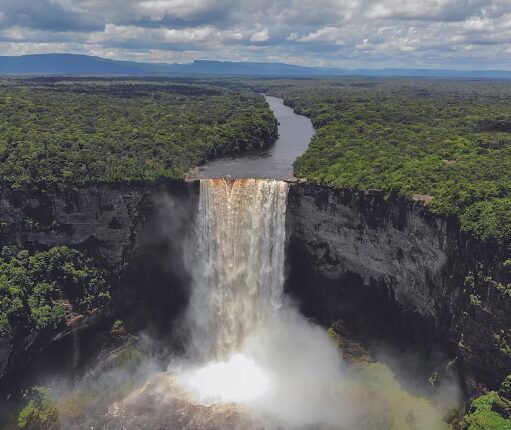
Deep in Guyana's untamed rainforest, Kaieteur Falls plunges with raw, unbridled power—a spectacle of nature few have witnessed. Five times the height of Niagara, its single-drop cascade thunders into the mist-shrouded gorge below, surrounded by pristine wilderness. Here, rare orchids cling to cliffs, and golden frogs dart through the spray. A place where time feels suspended, and the earth's wild heart beats loudest.
Factos sobre o destino
- Official Name: Kaieteur National Park
- Type of Destination: National Park
- Brief Description: A pristine wilderness centered around Kaieteur Falls, one of the world's most powerful single-drop waterfalls, nestled in the heart of Guyana's rainforest.
- Location: Potaro-Siparuni region, within the Pakaraima Mountains of Guyana's hinterland.
- Year Established/Founded: 1929 (designated as a national park)
- Governing Body/Management: Protected by the Guyana Tourism Authority and the National Parks Commission.
- Significance/Known For: Home to Kaieteur Falls, which plunges 226 meters (741 feet) with a rare combination of height and water volume, and a biodiversity hotspot with endemic species.
- Size/Area: Approximately 627 square kilometers (242 square miles).
- Main Attractions/Key Features:
- Kaieteur Falls, the park's centerpiece
- Diverse flora and fauna, including the golden frog and Guianan cock-of-the-rock
- Untouched rainforest trails with panoramic viewpoints
- Best Time to Visit: Year-round, but the dry seasons (February–April and August–November) offer clearer views and easier access.
- Entrance Fee/Ticket Info: Yes, fees apply; guided tours are recommended and often include transportation.
- Operating Hours: Daylight hours; access is typically via guided tours with fixed schedules.
- Website: Guyana Tourism Authority
Fundamentos
- Melhores Meses para Visitar: janeiro, fevereiro, março, novembro, dezembro
História
History of Kaieteur Falls
Kaieteur Falls, one of the world's most powerful single-drop waterfalls, is a natural wonder nestled within the untouched rainforest of Guyana. Its history is as dramatic as its 741-foot plunge—a blend of geological marvel, indigenous legend, and colonial-era discovery. The falls were carved over millennia by the erosive force of the Potaro River, cascading over the ancient sandstone of the Pakaraima Mountains. For the Patamona people, the falls hold deep cultural significance, woven into their oral traditions. European exploration of Kaieteur began in the 19th century, but its remote location preserved its pristine grandeur, allowing it to remain a symbol of Guyana's wild beauty.
Principais datas históricas
- 1870: British geologist Charles Barrington Brown "rediscovered" Kaieteur Falls during a colonial survey, though indigenous peoples had long known of its existence. His account brought international attention to the site.
- 1929: The falls were declared part of Kaieteur National Park, one of the earliest protected areas in South America, safeguarding its ecological and cultural heritage.
- 1970s: Improved access via small aircraft allowed sustainable tourism to flourish, introducing the falls to a global audience while preserving their isolation.
- 1999: The park was expanded to over 240 square miles, further protecting the surrounding rainforest and its biodiversity.
Excursões e viagens de um dia
Kaieteur Falls & Surrounding Wonders
The grandeur of Kaieteur Falls is only the beginning of the adventures awaiting in Guyana's untouched wilderness. These curated excursions reveal the depth of the region's natural and cultural riches.
1. Kaieteur Falls Overflight & Guided Hike
A scenic flight from Georgetown offers a breathtaking aerial view of the falls before landing at the airstrip for a guided hike. Traverse the rainforest to witness the Potaro River plunging 741 feet into the gorge, with opportunities to spot rare wildlife like the golden frog. Ideal for nature lovers and photographers, this full-day excursion blends awe-inspiring vistas with ecological discovery.
2. Orinduik Falls & Ireng River Adventure
Journey to the serene Orinduik Falls, where the Ireng River cascades over jasper terraces, creating natural pools perfect for a refreshing swim. This day trip, often combined with Kaieteur, immerses travelers in the savannah landscapes of the Pakaraima Mountains. A quieter alternative to Kaieteur, it suits those seeking tranquility and a glimpse into indigenous Patamona culture.
3. Jungle Trek to Amatuk Falls
For intrepid explorers, a guided trek through Kaieteur National Park leads to the secluded Amatuk Falls. This challenging hike rewards with untouched beauty—tumbling waters framed by dense rainforest. Along the way, guides share insights into medicinal plants and wildlife. Requires moderate fitness; best for adventure seekers.
4. Bartica & Essequibo River Exploration
A longer day trip ventures to Bartica, the "Gateway to the Interior," via the Essequibo River. Visit historic gold-mining sites, fish for piranha, or simply absorb the riverine life. Combines cultural history with leisurely boat rides, appealing to families and history enthusiasts alike.
5. Iwokrama Canopy Walkway & Wildlife Spotting
Though farther afield (4-5 hours by road), the Iwokrama Forest offers a sublime complement to Kaieteur. Walk among treetops on a suspension bridge, spotting toucans or howler monkeys, then cruise the Burro Burro River at dusk. A must for ecotourists, with overnight stays available.
Quando visitar
Best Time to Visit Kaieteur Falls
Kaieteur Falls, nestled in the heart of Guyana's rainforest, is a spectacle of nature best experienced when conditions align for both accessibility and visual grandeur. The falls are influenced by two primary seasons—wet and dry—each offering distinct advantages for travelers.
Repartição sazonal
Dry Season (September to November & February to April)
The dry season is marked by reduced rainfall and more predictable weather. Temperatures hover between 24°C to 32°C (75°F to 90°F), with lower humidity and clearer skies. This period is ideal for hiking and photography, as the trails are less muddy and the falls remain powerful but framed by less mist. However, the reduced water volume may slightly diminish the falls' thunderous impact.
- Pros: Easier access to trails, fewer insects, and optimal conditions for aerial views via small aircraft tours.
- Cons: Slightly less dramatic water flow compared to peak wet season.
Wet Season (May to August & December to January)
Heavy rainfall transforms the rainforest into a lush, vibrant paradise, with the falls at their most majestic. Temperatures remain warm (23°C to 30°C or 73°F to 86°F), but humidity is high, and trails can be slippery. The increased water volume creates a breathtaking spectacle, though mist may obscure some views.
- Pros: The falls are at their most powerful, and the rainforest teems with life, offering exceptional birdwatching opportunities.
- Cons: Challenging trail conditions and potential flight delays due to weather.
Recomendação geral
For those seeking a balance between accessibility and natural splendor, September to November is the prime window. The falls retain much of their wet-season grandeur while trails remain manageable. Adventurers who prioritize raw spectacle may prefer the peak of the wet season (May to July), though they should prepare for rugged conditions.
Considerações
The dry season coincides with Guyana's peak tourist period, so expect modest crowds and higher prices for flights and lodging. The wet season, while less crowded, may require flexibility due to weather disruptions. Local events like Guyana's Mashramani festival (February) add cultural vibrancy but may affect travel logistics.
O que levar na mala
Essentials for Kaieteur Falls
Kaieteur Falls, nestled in Guyana's rainforest hinterland, demands thoughtful packing for its humid climate, rugged terrain, and remote setting. Prioritize lightweight, durable items that protect against rain, insects, and the equatorial sun.
Vestuário e calçado
- Quick-dry clothing: Lightweight, breathable fabrics to manage humidity and sudden downpours.
- Waterproof hiking shoes: Trails can be muddy and slippery; sturdy traction is essential.
- Long-sleeved shirts & pants: Protects against insects and sun while traversing dense foliage.
Rainforest Gear
- DEET-based insect repellent: The falls' surroundings are rich in biodiversity, including mosquitoes.
- Compact rain poncho: Sudden showers are frequent; a poncho is more practical than an umbrella in dense forest.
- Dry bag or waterproof case: Keeps electronics and essentials safe during boat rides or hikes.
Acessórios práticos
- Binoculars: Ideal for spotting wildlife like the iconic Guianan cock-of-the-rock.
- High-SPF sunscreen & wide-brimmed hat: The equatorial sun is intense, even under canopy cover.
- Reusable water bottle with filter: Stay hydrated; potable water sources may be limited.
Cultura
The Patamona Legacy and Indigenous Connection
Kaieteur Falls is deeply intertwined with the Patamona people, an Indigenous group whose ancestral lands encompass the falls and its surrounding rainforest. The name Kaieteur itself derives from a Patamona legend—the tale of Chief Kai, who sacrificed himself by canoeing over the falls to appease the Great Spirit Makonaima. This story is not merely folklore but a living narrative, shared by local guides with a reverence that underscores the spiritual significance of the site. Visitors may notice subtle cultural markers, such as traditional benabs (thatched shelters) near the falls, used by Patamona during gatherings.
Artisanal Craftsmanship
The Patamona and other nearby Indigenous communities create distinctive crafts, often using materials sourced from the rainforest. At Kaieteur, small-scale vendors occasionally offer woven balata crafts—figurines and baskets made from the latex of the bulletwood tree—a technique passed down through generations. Unlike Guyana’s coastal regions, where African or Indo-Guyanese influences dominate, the artistry here reflects an unbroken connection to the land, with motifs inspired by local wildlife like the golden frog or the cock-of-the-rock bird.
Cultural Etiquette and Visitor Engagement
Respect for the falls’ sacredness is paramount. The Patamona view Kaieteur as a place of spiritual power, and visitors are encouraged to observe quietly rather than treat it as a mere photo opportunity. A few unwritten customs to note:
- Ask permission before photographing Indigenous residents or their crafts.
- Refrain from swimming in the pools near the falls, as some are considered spiritually significant.
- Engage with local guides—often Patamona themselves—who share oral histories absent from written guides.
Festivals and Seasonal Rhythms
While Kaieteur lacks large-scale festivals, the falls’ cultural pulse aligns with Patamona traditions. During the Mashramani celebrations (Guyana’s Republic Day in February), some Patamona communities incorporate storytelling sessions about Kaieteur into their observances. The dry season (September to April) also sees occasional heritage walks, where elders demonstrate traditional uses of medicinal plants along the trails.
Nuances culinárias
Food near Kaieteur is simple yet reflective of the hinterland’s self-sufficiency. Packed lunches for visitors often include farine (toasted cassava flour) paired with smoked fish or wild meat, prepared using methods unchanged for centuries. Unlike coastal Guyana’s curries or pepper pots, meals here emphasize minimal seasoning, allowing the natural flavors of rainforest ingredients to dominate.




