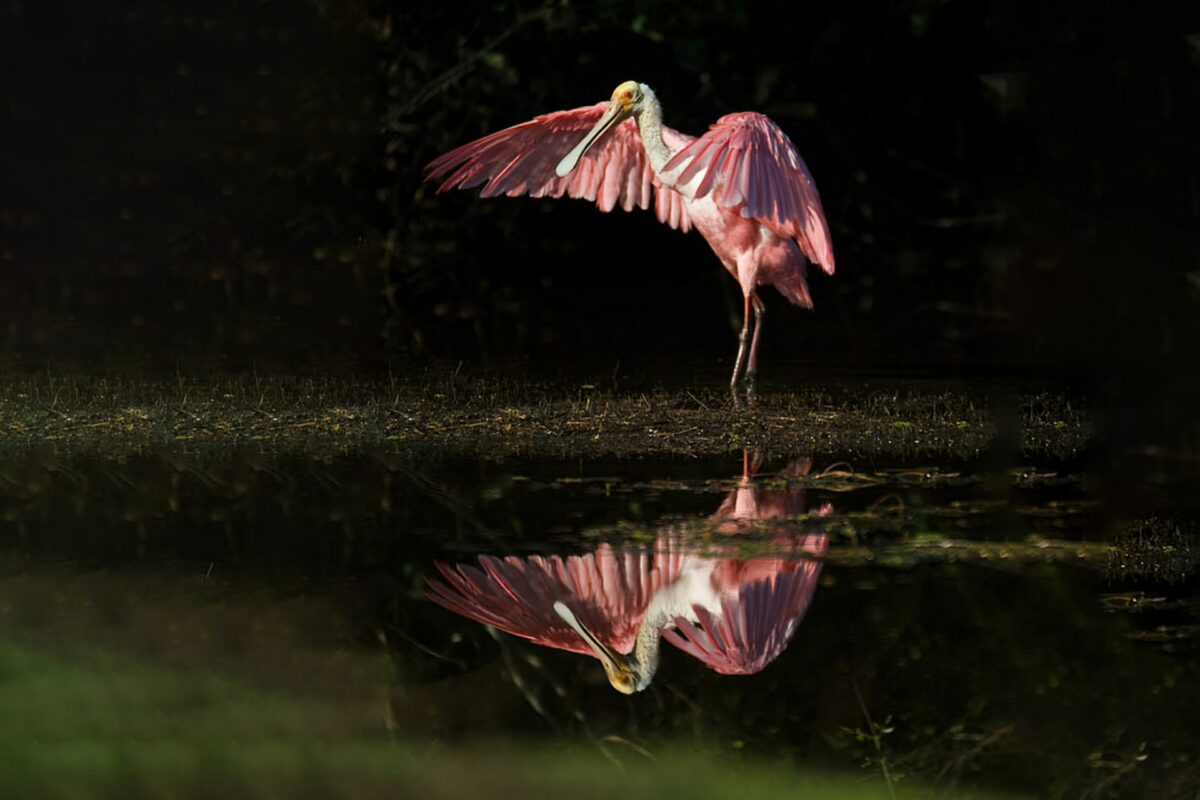
The roseate spoonbill is a large wading bird native to the Americas. It has a white plumage with bright pink wings, tail, and legs. Its most distinctive feature is its flat, spoon-shaped bill used for sifting food in shallow waters. Common in coastal areas.
Habitats & Distribution
Roseate Spoonbills frequent shallow wetlands, thriving in brackish and freshwater marshes, mangroves, tidal ponds, and estuaries. They prefer areas with abundant aquatic vegetation and muddy or sandy bottoms where they can sweep their uniquely shaped bills to forage for small fish, crustaceans, and insects. These birds often inhabit coastal regions but can also be found in inland wetlands. Geographically, Roseate Spoonbills range from the southeastern United States, particularly along the Gulf Coast, through Mexico, Central America, and the Caribbean, extending as far south as Argentina and Chile. They are year-round residents in parts of their range but may exhibit some seasonal movements, especially in response to water availability and food resources.
Behaviours & Reproduction
Roseate Spoonbills exhibit cooperative and often social behaviors, forming flocks especially during non-breeding seasons. During the breeding season, males engage in elaborate courtship displays consisting of bill clapping, head shaking, and ceremonial nest building to attract females. Once paired, these monogamous birds establish nesting colonies in mangroves or other dense vegetation near water. Both parents share responsibilities, taking turns incubating eggs and feeding chicks by regurgitation, reflecting a strong cooperative approach to rearing their young. In terms of unique reproductive strategies, they sometimes synchronize their nesting efforts with other wading birds, ensuring increased vigilance and protection against predators in larger communal settings.
Diet
Small fish, shrimp, insects, crustaceans
Colors
White plumage with pink wings, tail, and light orange legs
Fun Facts
When feeding, roseate spoonbills swing their spoon-shaped bill through the water back and forth to find small aquatic organisms.
Conservation Status & Efforts
The Roseate Spoonbill is currently listed as a species of Least Concern by the International Union for Conservation of Nature (IUCN), but it faces several regional threats that affect its population trends. While the global population is stable, local declines have been observed, largely due to habitat loss, pollution, and disturbance from human activities. Wetland drainage, coastal development, and water pollution significantly reduce the availability of their preferred feeding and breeding areas. Conservation efforts for the Roseate Spoonbill include habitat protection and restoration initiatives, particularly in crucial breeding grounds. Organizations are also working to control pollution and manage water levels in wetlands to ensure suitable conditions for feeding and nesting. Community engagement and education programs aim to mitigate human disturbances and promote sustainable practices near critical habitats. Complementary measures involve legal protections and the enforcement of regulations that minimize habitat destruction and disturbance.
Gallery






