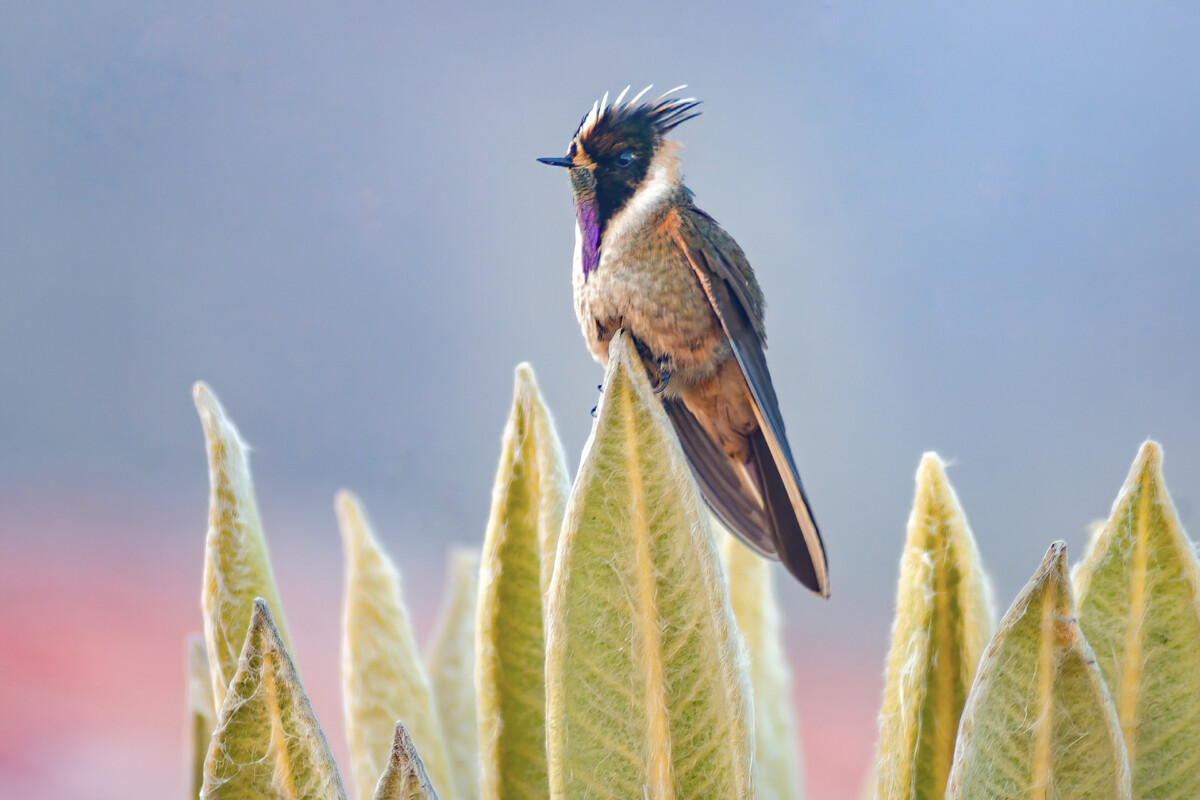
The Buffy Helmetcrest (Oxypogon stuebelii) is a short-billed hummingbird found only at extremely high elevations in Colombia’s central Andes. Adult male’s green and blue beard, black and buff head pattern, and shaggy crest. Female and younger males lack the crest and beard and have more subdued coloration, but they are still recognizable from their large size and relatively tiny bill. Often seen feeding from or perching on Espeletia plants. Espeletia, also known as Frailejón, is native to high Andean grasslands; it is characterized by its short, trunk-like stem, large, elongated leaves, and small, yellow flowers.
Hábitats y distribución
The Buffy Helmetcrest is endemic to Colombia, specifically found in the páramo ecosystems of the central Andes. These high-altitude grasslands, typically situated between 3,800 and 4,800 meters above sea level, provide the cold and wet environment that this species thrives in.
Comportamiento y reproducción
Esta especie de colibrí es conocida por su comportamiento territorial, a menudo defendiendo agresivamente sus zonas de alimentación y cría de los intrusos. Construye pequeños nidos en forma de copa con fibras vegetales, musgo y líquenes, normalmente en salientes rocosos o entre vegetación densa. La reproducción suele tener lugar durante la estación lluviosa, cuando los recursos alimenticios son más abundantes.
Dieta
Este colibrí se alimenta principalmente de néctar de plantas con flores de gran altura, especialmente las que tienen flores tubulares. También consume pequeños insectos y arañas para obtener proteínas.
Colores
Gris con cresta de color búfalo y barba púrpura
Datos curiosos
Adapted to high-altitude environments with a higher concentration of hemoglobin in their blood.
Males fan out their elongated throat feathers during displays.
Aggressively defends feeding and breeding territories.
Estado y esfuerzos de conservación
The Buffy Helmetcrest is currently classified as Endangered on the IUCN Red List. Habitat destruction, primarily due to agricultural expansion and burning of páramo vegetation, poses a significant threat to its survival. Conservation efforts are focused on habitat protection and restoration, as well as raising awareness about the importance of páramo ecosystems. Initiatives include creating protected areas and working with local communities to promote sustainable land use practices.
Galería